Mountain of the Misfits: The Adventure of Not Fitting In

“We’re a couple of misfits
We’re a couple of misfits
What’s the matter with misfits
That’s where we fit in!
….
We may be different from the rest
Who decides the test
Of what is really best?
We’re a couple of misfits
What’s the matter with misfits
That’s where we fit in!”

-“We’re a Couple of Misfits”, Burl Ives (from The Island of Misfit Toys)

[Note: When I talk about fitting in vs. belonging, I’m often going off Brene Browns work. To paraphrase in my own words, fitting in is needing to change who you are, or making yourself a certain way, to fit into a group. Belonging is being accepted for exactly who you are, free to be your true, authentic self. Often when working with younger clients, I see the need to fit in as something negative. As an adult who can choose to only surround myself by people who accept me for who I am, I wonder if fitting in has value…for example, we choose different groups to hang out with based on interest, hobbies, etc. If we’re a bowler hanging out with a bunch of skiers, I may belong but not fit in.]

For most people, the affirmation “I am enough” is empowering.

The opposite is true for me. I have always been…

Nice, enough.
Pretty, enough.
Athletic, enough.
Smart, enough.

Enough to get by.

Nice and pretty enough to make it through the high school cliques and college clubs. Nice, pretty, smart, and athletic enough not get bullied and move around different groups, without fitting in to any. Depending how much energy I had, I could hide behind athletic gear or school books to stay out of the way or present to the world a facade of looking like I fit in.

I never did.

That’s not to say I never belonged. I have a group of 5 friends from high school (some from elementary school) that I still see at least once a year. While they may still good-naturedly make fun of me and my lack of millennial technological abilities, they have always fully appreciated me for my oddities.

In my late 20s, I joined an intimate group…a cohort of graduate students training to be wilderness therapists. As we were becoming helpers an healers, our program required each of us to go deep inside of ourselves and share our vulnerabilities in the heart of Mother Nature, the one place I have always felt I belonged. My cohort was patient with me. It took me nearly 2 years and weeks of backcountry travel (hiking, climbing, paddling), but eventually I felt like I was part of the group, part of the Whole.

In my 30s, I realized some people appreciated me fore my eccentricities, I think because it allowed them to be more themself too, and it helped me embrace them.

Still, I felt trapped between two worlds…or perhaps, a world I never belonged to.

“If you feel like you don’t fit into the world you inherited it is because you were born to help create a new one.” – Ross Caligiuri

*To be clear, I will admit that part of my current personal work is looking at how I create more distance by the story I tell myself of how or why I don’t fit in and realizing that the distance is a protection/defense mechanism.

The other weekend, I texted a friend: “I’ve told myself I belong 50+ times this weekend so far. Eventually it has to work, right?” (It wan’t even 8am Saturday morning).

He reaffirmed that I was not the ugly duckling, that I did belong, but I misread the rest and somehow came up with the message I needed to hear: You’re right, you don’t fit in.

And that felt good. Right. Comforting.

I don’t fit in, so there is no point into putting my energy into trying.

I don’t have a community like a friend said he finds in the ultra-running world. If I do have a community, its simply of all the other misfits.

Thinking about it more, I don’t know if there’s any other group I would want to fit in with. Fitting in with the misfits. The others who are just themselves.

We might be widespread. Or you might be reading my words. (I’m guessing most people have felt like a misfit at least a few times in their life). Know that I am grateful for you. You help me feel less alone.

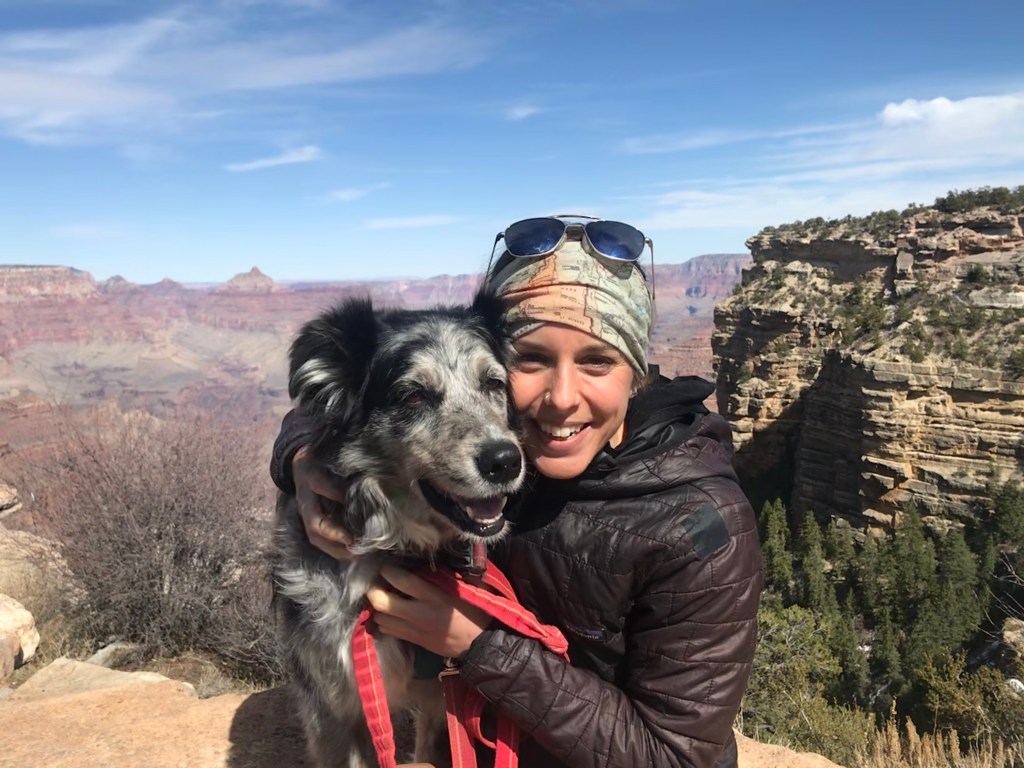
In the meantime, I’ve got a wonderful small group of friends and family who love and accept me for exactly who I am. I have a friend who gets my empathic and spiritual side who I can explore big questions with. A friend who has had the patience to learn and understand how my mind works so I don’t have to apologize or explain myself when I’m off on another tangent.* A friend who is gay and non-binary who probably know what I feels like to be an outsider more than I ever will, and has shown me some of the most beautiful, free love I’ve known in this life. A twin sister who is way cooler than I am, but has and always will make sure I don’t feel too left out. Plus a dog who is just an extension of myself (well, maybe she’s my alter ego), who’s shown me unconditional love from day one.

*How many tangents have you counted in this post so far?!

I’m hopeful I’ll get there one day too. A place of more than enough. Or perhaps simply enough for me. Acceptance. Self-love.

On a deep level, when I can access and step into my Higher Self, I know I’m exactly where I am supposed to be and who I am supposed to be. While I may be “me”, the notion that I am separate is a falsity, and one that I’ve seen cause dis-ease in a lot of people, maybe the world. Stepping back into connection with Nature has been the easy part for me. I’ve never felt anything accepted in Her arms and don’t take it personally when I get rained on. Stepping back into connection with myself is an active journey, but I’m on my way. As long as I’m not comparing myself to others (comparison: a fear that tells me “I’m not good enough”) I genuinely like myself…most of the time. Re-connecting with others has been harder, I think because of that fear. Realizing that other humans are an extension of the Whole, the Whole that I am also an extension of, offers me and them a little more grace and compassion.

…And here is the introvert part of me that hates small talk and prefers to ponder and dwell in big ideas. 😉

“True belonging is the spiritual practice of believing in and belonging to yourself so deeply that you can share your most authentic self with the world and find sacredness in both being a part of something and standing alone in the wilderness. True belonging doesn’t require you to change who you are; it requires you to be who you are.” 
― Brené Brown, Braving the Wilderness: The Quest for True Belonging and the Courage to Stand Alone

Big World

Little ity, bity me. Big, big world. 

Somehow comforting.

My introversion: In cities, at parties, I feel lost.

My extroversion: In Nature, surrounded by mountains, I feel part of it all. 

My work: To find harmony in each part. 

My gift: To find beauty in each piece. 

My struggle: To find harmony in my own parts and the beauty within me.

My help: Wind, the Great Connector.

My truth: Love is at my core. 

Our truth: Love is at our core.

Illumination

Why is the darkness so enticing? Like the slow curl of an index finger, calling us in. Temporarily, the darkness offers us respite. A cocoon of security. The illusion is of its permanence, but truth in its ease. Perpetual safety that is not living, but a type of death.

It’s trick? Making us deny the wisdom of light. Light takes energy. It is energy. It gives energy. We are all sunshines and solar panels (or plant 🌱). Light has no limits beyond what the mind perceives. The light calls us to grow. It asks us to shine.

Photo cred: Derek Brooks Photography

33

33 and I’ve never felt so free
I’ve got the Earth under my soles
The Sky under my wings.
Life in my veins.

I’m 33
Still young
My sun hasn’t fully reached its peak.

But it’s getting closer
With the breeze I swear I catch the scent of fall.

In my health, I know I could live double, triple 33
66, 99.

I either don’t think I will
Or I don’t want to
Or both
Either ego or a spiritual thing
Again, probably both.

Do I fear Death?
Sometimes
When I’m feeling unsure
Unsure of what’s next
Unsure of myself.

Mostly, I fear living a life unexplored
Mountains
Myself
The stories of others.

I know I can’t explore it all
But in my Heaven
The journey won’t end.

My older sister, she only got 36.
I’ll hug her again
Maybe Pacer won’t bite.
We’ll run and play forever.

Then I come back
To the Here
The Now.

I reassure myself
I am on my path
I feel it mostly in contentment, but also joy
I have explored, learned, and gained so much already
It’s hard to see what lies ahead
Beyond what I create.

And that is enough.

One More Night

One more night at my spot in the clouds.
To read, to write.
To wander, to breathe, to be.
And maybe to cry a little too.
Away from it all…
Or maybe I’m in it all?
Alone with my pup.
Here with the pines.
The flowers and the bees.
The snow melt cascading behind.
Mountains surrounding.
What else more?
More complicated, most likely.
Save for the love of family and friends,
My world needs little else.


Spring: Embracing Change

That is one good thing about this world… there are always sure to be more springs. -L.M. Montgomery

Let me start out by saying that changing, growing, and expanding is hard.  Sometimes really hard.  It can be painful.  (The term “growing pains” is accurate beyond our school-aged growth spurts.)  It’s certainly not always fun.  But the journey is always worthwhile.

When a new client walks into my office at my private practice the first thing I always try to acknowledge is how brave they are.  In a society that values independence and a bootstraps attitude, asking for help takes courage. Additionally, being willing to look at ourselves, our behaviors, and our wounds can be scary and a brave undertaking.  It’s the most beautiful adventure that I have been honored enough to witness in other human beings.  

The season of spring brings change and growth to the forefront, both in nature and inside of us, if we are willing to look.

The older I get, the more I feel the change of each season inside of me.  I also recognize it regularly in my counseling practice. In summer, there’s an internal sensation of energetic being, exploration, and an allowing of the present self.  Fall is often a time when we recognize a time of letting go as well as harvesting our resources as we prepare ourselves for an internal winter.  During the winter months, we switch for a need to reflect, hibernate, and go deeper inside of ourselves.  Winter, as dark and cold as it may be, is usually when I see deeper wounds start to heal. Then out of the darkness comes spring.  A time for new life and new energy, but this path is rarely linear.  There’s usually a movement and release, and then we hit a rock (or a snowstorm) and need to pause and reroute.  This might happen a few times before the growth turns into a blossoming.  

How do we work with the changes, growth spurts, and growing pains of spring?  

We embrace it all. We tend to ourselves as we would tend to a garden.  Knowing that growing isn’t easy, we weed out what no longer serves or nourishes us.  We think of the things we need to support our upward rising.  Is it more connection with friends, a dose of self-compassion, more time outside, or even more time inside?  Acceptance of where we are at in the process is also key.  Some people are more like Pasqueflowers that bloom in early spring.  Others are like Colorado Columbines who need all spring to deepen their roots before they burst into the light of summer.  We don’t judge the flowers for when they bloom, but love them whether we get to see their beauty in April or July.  We must do the same for ourselves. 

Spring Mental Health Practices

Yourself as Garden

Similar to the above process, imagine your internal journey as a garden.  What are you growing?  Does it need some more time safe from the elements in a greenhouse, or is it ready for exposure and testing outside?  What are the potential blocks to growth?  Is there anything that needs weeding out?  What nutrients (positive care) do you need to support your growth?

If You Were a Tree (or Flower)

If you were a tree, what type of tree would you be.  Why?  What characteristics of the tree do you possess?  What characteristics would you like to possess?  

Adding Intention

As the weather (slowly) starts to warm, you may be naturally finding yourself outside more, going for hikes, sipping your morning coffee on your deck, taking your dog for walks more often.  Is there a way you could make these acts a little more meaningful?  For example, is your morning coffee now a way to greet a new day?  Your hike a time to connect with the earth?  Or your dog walk a time to let go of the stressors of the day and find freedom in your movement?  A little bit of intention can go a long way.

Broken

I tell my clients that they are not broken.

They are not damaged goods.

They don’t need fixing because they are amazing and whole as they are.

But what I’ve come to learn is that is only part of their broken identity.

Underneath the broken story is actually worse. More painful.

The belief that they are unlovable.

And dare I say

I’ve felt that way too.

Unworthy.

Of Love.

The most sacred gift.

Broken actually feels easier to say.

The broken pieces are shards of glass, protection from the deeper wound.

Wounds cannot be fixed. But they can be healed.

Slowly.

Often met with resistance. Fear. Sadness.

Possible.

As Rumi said “The wound is the place where the light enters you.”

And where light is shined, beauty if found.

Love, revealed.

Change, Grief, and Beauty Among COVID-19

Change is hard.

This time is challenging.   Even for an introvert.  Even for a therapist.  For a human.

At times, the world seems to be spinning.  The ground seems to resemble quick sand.  

What will life be like in the future?  What will life be like tomorrow?

Before I continue, let me say that there are different types of grief, though all grief comes from some form of loss.  Individually, people are experiencing the loss of loved ones, the loss of a job, the loss of connecting with friends.  For this piece, I’m going to focus specifically on societal grief, which incorporates individual griefs coming together as well as the loss of life as we knew it, also known as change.  However, many will find this applicable for various types of grief.

When we talk about grief, many people will most widely know the work of Elisabeth Kübler-Ross and her description of the 5 Stages of Grief: denial, anger, bargaining, depression, and acceptance.  Can you look back at your own process since the beginning of March when life started to change because of COVID-19? Where are you now?  AND, if you can’t identify with one or any of the stages, that’s okay too.  We’re humans, not machines, and the stages were created as helpful sources of information, not sticky labels.  

Okay, so we have all these uncomfortable feelings like sadness and anger.  But here’s the question:  WHY are we feeling them?

Since this article is a monologue, I’ll just have to tell you:  on the other side of grief is joy, love, happiness, and gratitude.  Grief, sadness, and anger over a loss only comes when we’ve had something, or someone, that also brought us joy and love.  

Martin Pretchel describes this best in his speech “Grief and Praise” which I highly suggest you go find on YouTube after you’re done reading this.  

In our case of the COVID-19 era ,  a lot of us are missing simple things.  Hugging our loved ones. Hugging strangers.  Going out to eat and sitting inside a restaurant. Traveling.  Not just to another country but to the city over. The crying baby sitting a seat over from us on the plane.  Not thinking about and analyzing everything we touch and who might have touched it before us.  Some of these things listed were always great.  Some of them we only realize were great now.  Ahhh, the gift of hindsight.  

The second idea I’m going to ask you to consider is a bit tougher: the possibility that grief and beauty can exist side by side. I remember in early September of last year when I got the call from my mom telling me she had cancer, less than 2 years after we found out my older sister had cancer.  I kept it together on the phone (partially because I was still in shock/denial) and then about a minute after I hung up collapsed to the floor in a pile of tears, snot, and slobber (my dog always licks my face when I cry).  For the next few minutes, I just let myself be consumed in the darkness of grief.  Then, somewhere still in a dark grey haze, I got up and moved.  The next day, I decided to carry on with my plans of running in the Wild Basin area inside of Rocky Mountain National Park.  Suddenly, I was consumed in the beauty of Mother Earth, the Aspen trees just starting to turn gold, the low hanging clouds around the mountains. I smiled.  It was then that I realized that I had the capability of holding both sadness and joy, the darkness and the light, simultaneously.  It was like discovering a new super power.  (Both my mom and sister are still fighting.)

70365183_10157783806422806_8884999412170883072_o

My guess is that others too have found joy and reasons to be grateful during the past 2 months, in spite of Stay at Home and Safer at Home orders.  Some of us have been able to spend more time with our kids, found time for hobbies from not needing to commute to work, discovered what it feels like to get enough sleep, or even found ways to deeper connect with others by virtual means.  We may have cried and laughed in the same day, in the same hour, even in the same 5 minute span. That is beautiful.  That is being human.  

Now we’re entering into this phase of what people are calling the “New Normal”.  Still, no one actually knows what that looks like.  It feels really unsteady.  But guess what?  You’ve already gone through this stage.  Probably several times.  And if you’re reading this, you’ve made it through.  Every. Single. Time. 

When we look at it more closely, life is actually a series of transitions, essentially leaving behind the old and stepping into the new.  More notable transitions are from adolescence to adulthood, single to married, childless to parenthood.  While I myself am not married or have kids (besides the fur baby), I’ve gone through several transitions in the past year, some unconsciously and some consciously.  The basis for any transition is letting go of the old, or parts of ourselves that no longer serve us, and into the new, be it a time period or more developed part of ourselves.   In Rites of Passage work, there are three stages: severance (letting go), liminal (not who we once were and not yet who we will become), and the incorporation phase (bring our new selves and gifts into the world).

As you’ve probably guessed, as a society we are somewhere in the liminal stage.  The liminal stage is usually the most uncomfortable phase, and it often feels like we are wandering around in a dark forest without a headlamp.  However, we don’t have to stay lost forever.  As soon as we add intention to the liminal stage, it’s like the moon suddenly comes out from behind the clouds. We may still not know exactly where we are going, but we’ve got a light to guide us. I call this the “wanderlust phase” (hence the name of my counseling practice, Wanderlust Counseling).  

We’ve lost pieces of the life we once had and mourned (and may be still mourning) that loss.  Most of us are still somewhere in the 5 stages of grief, but getting closer to acceptance, sometimes still fluctuating back and forth between acceptance and denial (which is totally okay).  With acceptance,  we allow an opening for the new to come in.  The questions then become: “What do we want to invite in?”  “What is our intention?”  “What can we and do we want to create, especially with the gift of hindsight?” 

And I have to wonder, is it just a coincidence that this all occurring in the year 2020?

These are questions that I suggest we all consider individually, but as a society, we can consider them together too.  In the past few weeks, I’ve heard the terms “The Coronation” and “The Great Realisation” where the writers contemplate things like waste, pollution, consumption (of goods and animals),  technology, communication and what is truly meaningful.  What do we want for our Earth?  What do we want for future generations?  How do we want to live our lives going forward?

I know most of us reading this don’t have nationwide political influence.  But many of us may have influence in our communities, or workplaces, our families, and in our own choices.  And so, when you are ready, I ask you to consider the main question in the last stage of transition, incorporation:  What gifts do you have to bring to the world? Because we come together with our gifts, we open up to the possibility of something more, maybe something better.  .

“The most beautiful people we have known are those who have known defeat, known suffering, known struggle, known loss, and have found their way out of the depths. These persons have an appreciation, a sensitivity, and an understanding of life that fills them with compassion, gentleness, and a deep loving concern. Beautiful people do not just happen.” 

Elisabeth Kübler-Ross

IMG_20200510_182555735_HDR

These Winter Winds

These winter winds

That lay deep inside

Amongst the stillness

They howl and rage

From the northwest

Caressing the mountaintops

An extra layer of ice

Blowing through my soul

Or with my soul

Stirring thoughts around

Harsh against my skin

Awakening the heart

Eventually

They quiet down

Until there’s on a wisp of drifting snow

A whisper

The Earth is never dead

Just resting

Just dreaming

And so She hums

A lullaby

Not into my ear

Into me

I watch the clouds move over a bright sliver of moon

Yes, my own too will pass.

IMG_7603


OCD Nation: Are We All Destined to Become OCD?

Here’s my short answer:  NO.

First of all, no one can actually be OCD, although someone can have OCD.

But let’s backtrack a bit.  What actually is OCD? OCD stands for Obsessive Compulsive Disorder.  According to the National Institute of Mental Health Obsessive-Compulsive Disorder (OCD) is “a common, chronic, and long-lasting disorder in which a person has uncontrollable, reoccurring thoughts (obsessions) and/or behaviors (compulsions) that he or she feels the urge to repeat over and over.”

We tend to throw around the acronym OCD a lot.  Sometimes, we’re partially accurate in describing the low-end of the spectrum, such as when someone needs his books in perfect order on the shelf or uses hand sanitizer everytime she shakes a few hands.  Other times, we’re much less accurate, like when we say it to describe someone who always goes back to check to make sure their car door is locked. That actually has to do more with conscious memory. A lot of times when we go to lock our door, or put down our keys, we’re thinking about 10 other things and don’t consciously think about the action we’re doing. We’re so distracted that we don’t even remember doing it, so we go back and check.  Really, this is more of a lesson in staying present.  

I could go into a bit more of what qualifies as diagnosable OCD according to the Diagnostic and Statistical Manual of Mental Health Disorders-5 (DSM-V), but honestly, I don’t love using the DSM-V and I don’t want to bore you.  The main thing you need to know is that what constitutes for clinical concern is when the behavior or habit negatively impacts a person’s everyday life. For example, if someone’s habit to keep his bookshelf in perfect order makes him feel better, even if it seems over-the-top to others, I’d consider it a positive or neutral coping mechanism.  On the other hand, if someone needs to switch a light on and off 7x, or clean their house all day to make sure there is not a speck of dust on any surface, even if no one is coming over, and their thoughts are telling them they have to do this even though they’d rather go spend time with a friend, then I’d probably want to work with them figure out the better coping tools and see what’s at root of their habits.

Now that we have a little bit better understanding of OCD, let’s apply this to COVID-19.  Right now, most of us are on high alert in fear we’ll come into contact with the virus. We’re washing our hands more, carefully dis-infecting our packages, keeping physical distance, covering our faces with masks, etc.  This is all important, and taking action to prevent ourselves from getting sick may actually help reduce anxiety.  But what happens when this is all done? (It will be, eventually.*)

*There may be a “new normal”, but we have the opportunity to make it a better normal.  A bit more on that topic below.

We can acknowledge the good take-a-ways.  Most of us, including myself, can afford to wash their hands a bit more and for a bit longer.  Some of us can learn to be a bit more diligent about coughing or sneezing into a tissue or their elbow rather than into open air.  

Also, a lot of us may remember from school that there’s a lot of good germs (bacteria, viruses, fungi, and protozoa) out there. Actually, as a nature-based therapist, I recommend digging your hand into the soil (some studies say that soil can act as an antidepressant).

So what’s going to keep us from compulsively washing and sanitizing our hands or obsessively thinking that everytime we go out we may contract a deadly virus?

Knowledge. Choice. Courage. Love.

Let me clarify, for someone who has a clinical form of OCD, it’s hardly a choice.  It is, however, a fear-based coping mechanism that has roots, often in some traumatic experience.  We also know that the symptoms of OCD can be greatly reduced with exposure and talk therapy. 

* While many people do find our current pandemic traumatic, by working with our emotions and thoughts in the now, we can limit it’s impact on our mental health.

What irks me the most when I hear others say that “we’re all going to be OCD after this…” (besides the “be” vs. “have” part) is that it ignores human resilience.  By saying everyone is destined to be OCD removes our ability to choose our paths forward. Sure, there are some things beyond our control, but whether it is by our actions, attitudes, or responses, we always have a choice.  As Holocaust survivor and psychiatrist Victor Frankle said “Everything can be taken from a man but one thing: the last of the human freedoms—to choose one’s attitude in any given set of circumstances, to choose one’s own way.”

For us, if we can step away from our fear for a moment, we have the ability to look at our options for the future.  To step back from our fear, we must first realize what it is: a natural and primal response to a threat. It activates our flight, fight, freeze response, which is a great response if we’re being attacked by a large predator, not so much if for an invisible-to-the-human-eye virus. In the brain, intense reactions to fear stem from the amygdala, while our prefrontal cortex, the thinking, rational part of our brain, goes offline. In order to get back into a prefrontal cortex, we often need to do an activity that helps us relax.  There’s a ton of options, but physical exercise, deep breathing, going outside, and journaling are the tools I most often share with clients.

When we give ourselves this space, we can then start asking ourselves questions like: What does the science say about the spread of germs?  How do we want to live our life and what is important to us? What behaviors are helpful, and what behaviors keep us from truly living? Collectively, are there any actions we can take to mitigate another pandemic or similar event? (Ex: Vote!)

That fear may still be there.  It may not leave for a while. But remember, “Courage is not the absence of fear, but rather the assessment that something else is more important than fear.” (Franklin D. Roosevelt).

If the fear and anxiety seem like too much right now, it also takes courage to ask for help.  Actually, asking for help may be the most courageous act of all, so I encourage you to talk to a friend or seek out a therapist. 

To end, my friends, wash your hands (20-30 seconds is just fine!), but remember to take the courage with you that lives deep inside your hearts.   

IMG_20200417_111457518
Trying to keep your house nearly dust free with a dog, especially when you live on a dirt hill= impossible!