"But if you tame me, then we shall need each other. To me, you will be unique in all the world. To you, I shall be unique in all the world . . ." – The Little Prince
I have done a lot of the deep inner work sifting through fear and pain. In doing so, I’ve also developed a deeper spiritual practice, which is ever strengthening. Even so, at this point, I am not immune to the tug of darkness.
While I have never been suicidal, there’s still a part of me (I used to say it was part of my soul, now I think its part of a shadow) that says “Okay. I’m done. I don’t want to be here (in the physical world) anymore.”
What time and wisdom have taught me is simply that this feeling will pass, the light will come back. That darkness can be my greatest teacher, but I have to be brave enough to pass through it.
Eventually, I will remember. I will remember that light, joy, and love never truly leaves us. It just gets blocked. And the only way to remove a block is to surrender to it, to feel the way through the darkness, or rather, the difficult emotions. Maybe the human experience is just learning how to remove the blocks from our path, strengthening the knowledge of our own sacredness and deepening our resolve to be in the light.
[In therapy, especially EMDR, I’m literally helping clients remove blocks, or in EMDR terms “negative cognitions” (including past memories and emotions) that were picked up from false narratives created in childhood in an attempt to explain the behavior of unhealed adults.
If I could talk to a person when they are feeling suicidal, the best wisdom I could offer is “this too shall pass.” At the darkest point, the wisest thing to do is to ask for help, to let someone else be the light until they can retrieve their own. And when they retrieve their light, it will be brighter than before, and when they start sharing that light with light others, they will bask in an even greater light. ]
This is a question many people have, but few have ever truly contemplated. We ask questions like, “If there was a God, how could He let children starve?” If we go any further than that, we usually end up at “There is no God” or “There is true evil (devil) in this world.” Neither of those answers do it for me. They’re just too incomplete, too reductionary. So I chose the path I lead my counseling clients on when they are feeling lost: go right into the darkness.
This essay is my attempt to explain darkness, from a human, spiritual, and mental health perspective and to answer the question “Is darkness real?”
My list on what darkness is or what could be ended up being a pretty long list. It included: evil, depression, night, shadow self, suppression of the light, death, rest, despair, fear, and shame. Some of the things on this list may read as inherently “bad”…but what about the night sky? What about rest? I quite enjoy my 8 plus hours of sleep each night, and anyone in Alaska will tell you that it’s hard to sleep without blackout shades. Then again, during winter, you’ll hear many Americans protest against the long, dark days, although I’ve learned to enjoy the extra time to move slowly and reflect. So if it wasn’t for our resistance to it, would the dark be negative at all?
As I was getting ready to write this essay, a friend replied to one of my social media posts on darkness. She asked me “Do you think the depression that comes with Winter is just something to sink into?” My reply, as usual, was nuanced. I replied “I would say it depends on how we want to define “depression”. Personally, I think surrendering to the “darkness” is simply part of winter/solstice. If I had to start definine things, I’d say depression is more going into the darkness and getting stuck there, rather than being able to go in and pass through.”
My counseling background tells me that depression is a few things. It’s the suppression of emotions, it’s the suppression of one’s true nature, and it’s the loss of hope. I think we could also call it the suppression of light. Like most therapists, I won’t say there are any negative emotions, just uncomfortable ones. However, many people do perceive emotions like sadness, fear, and anger as negative, and for various reasons (that’s an essay in itself), they don’t feel them. Unfortunately, that doesn’t mean they go away. It means the emotions get stuck in their bodies and like clouds that continue to build up, they block out any light. In the darkness of that inner cave, it’s hard to find a way out without any help, or without hope, so people get stuck. Lost. Maybe this is what it means to be a lost soul. The true enemy is not the fact everything feels dark, it’s forgetting that there is a way out.
To break from theory for a moment, I’ll add my personal experience. When I experienced depression in my teens and twenties, depression was a mixture of numbness and intense self-loathing. Sadness was there too, but the tears also told me I “wasn’t okay”, that something must be wrong with me. Since then, I’ve had many therapy sessions and done a lot of inner work on my own that was all about going into the darkness, which was really just all my unfelt emotions and negative beliefs about myself built up. Feeling the “cloud of my emotions”, and really, experiencing the storm inside of me allowed the clouds space to move. This gave a chance for the sun to come out. Now, the emotions still come, but they pass through my body more easily.
Next, there’s the theory of the shadow self. If you are a visual person, you can literally think of your own shadow as the 3pm sun hits your body and creates a shadow of your body, like a stealth body guard. Our shadow parts are “the guardians” of the parts of us we reject and that lay outside of us, unaccepted and not to be seen, unintegrated into the whole of ourselves. Or maybe more accurately, shadow parts are the black cloaks that surround the vulnerable parts of us left deep, deep inside of us, almost forgotten…and God knows, we’ve tried to forget them. Shadow parts may also be considered our inner demons, the traumas we have not yet faced. If you’re from the midwest, your shadow part might be hiding the emotional part of you, since “being tough” and not showing emotions is considered a value in that part of the country. Or, if you identify as male, it may not have been okay to show your feminine side as a child. In fact, you probably heard it was bad or weird. So you rejected that part of you. To cover up that part of you, you may have even created an alter ego wrapped in toxic masculinity. The problem is, you’re not whole without the emotional, feminine part of you. Our job is to take our shadows, or rather, the parts that they are protecting, and reintegrate them back into our whole being.
Sometime during the writing of this, I went to see a Reiki therapist to help gain insight on why my Achilles tendon wasn’t healing. Among other insights, he shared with me the vision he had of me curled up in the fetal position. I told him “I know that vision.” In my darkest moments, or what I had then considered my “weak moments”, this is the position anyone would find me in. The image had come up many times in therapy, and I had touched on it doing inner child work, but there was always some resistance. The vision goes back to me as a young girl. Feeling alone, dejected, and unloved. My own darkness: the belief that I am not loved. Logically, I know that there are lots of people who love me. Emotionally, I’ve always felt separate. In one break up I found myself saying “Why don’t you love me?”. But it was never about the guy. It was my core wound. And all the shadows around that evolved to help protect me from feeling the pain of that wound. The only cure was to go in and do the intense, intimate work of learning how to love myself, to go back to my younger self and say “I love you. I will not abandon you.” It was and is some of the hardest work I have ever done and continue to do.
But what about evil?
I’ve always considered myself the type of person that feels the immense pain of the world. I resisted much of this sensitivity through my early 20s because accepting the cruelty was too much to bear. How could such evil exist? If there was a Higher Power, how could they let this happen? So I chose ignorance. I didn’t want to think about it…so I didn’t.
Now, I’m a devout vegan. The thought of an animal ever being hurt can bring me to tears instantaneously. In saying that, my goal isn’t to turn everyone reading this into a vegan (though admittedly, that would be lovely), but to simply help others be aware of when they choose to ignore evil in any area of their life, to ignore darkness. Additionally, I stay updated enough on the news to know what’s happening, so I can help or donate when I can afford to. Yet to go deeper into the wars, to women being executed for claiming their right to exist, to the children dying of starvation…well, I could easily get lost in the darkness all over again and simply go numb to the pain. There’s no sense in any of it…because a world not filled with love is nonsensical! Here, I’m not going to claim that I know with certainty the answer as to whether or not evil exists on its own (although I try), but I can theorize that in many spaces, evil exists where love is forgotten. I hand out no excuses, but I see many of the “evil” leaders of the world trapped in a dark space where love and hope has been so far pushed away that their memory has no recollection of it ever existing. I see them as children in the fetal position, in a cave of darkness surrounded by shadows, and wrapped in a heavy blanket of shame. The shame tells a lie: “I must not be lovable”. Because love is a foreign concept, power becomes the desired feeling and monsters help block the lonely child from the fear of being unlovable. With the inner demons too much to bear, they have created a demon out of themselves. If only they knew the truth: that they are love, not their shadows.
Suicide, on the other hand, happens when a person turns their inner demons on themself. They internalize the shame until it truly becomes too much to carry. Too much to live with. Instead of attacking others, they attack themselves in the most destructive way possible. It doesn’t seem like a choice, because all they can see is the shadows inside of themselves and the shadows have blocked out the light.
In both instances, the lie is that one is unlovable. That love is too far gone to ever get it back. If only they knew…
Knew what?
I guess that brings us back to the beginning.
Is darkness real?
Some would argue that if we created a room without windows, only darkness would exist. I would argue back that they blocked out the light.
What about the monsters under the bed? Would they still be there if we turned on the light?
What if we’re too scared to look?
A lot of great spiritual teachers say that fear is the opposite of love, which I believe is nearly the same thing as saying that darkness is the opposite of light.
If that is true, why would anyone ever be scared of love?
This is where I usually have to bring inner child work into therapy. When I work with adults, some of them are very set in the belief that they are not good enough, that they don’t matter, that they are undeserving of love. Then I ask the question…would they ever say any of those things to a child? Could a child ever not be good enough? Could a child ever deserve the bad things happening to them? “Hell no!”, they say. But what about their 7 year old self?
Without going too deep into attachment theory and developmental research, a child’s view is “selfish”, in that it’s hard to see outside of themselves for answers. If a parent hits a child, the only reason a child can come up with is that it’s because they are bad, not because the parent has issues. And so, this little, innocent child believes they are defective. Something must be wrong with them, because in a young child’s eye, their parents know everything and are the omnipresent being in their world. Truly, children depend on their parent’s for survival, so a child must learn to do whatever they can to survive, even if it means coming up with a facade, or the belief that they don’t matter. That’s the only way they can make sense of misattuned love. The only way we can make sense of darkness.
As adults, we forget about our own light, that the power is in us, not our parents and their demons, because we’ve created our own. We’ve spent our whole life living in the shadows and allowing fear to protect us from harm. It’s hard to see any other option. (Fear truly is responsible for our primal safety. For example, if a child can tell when a parent is upset, they probably know it’s a good day to stay in their room and “hide”. Remember, basic psychology tells us that fear is our bodies’ survival response, allowing us to fight, flee, or freeze when we need to.) The fact that we’re actually free beings, that love is our core, and we’re capable of truly amazing things…well that sounds crazy.
And I, as a mental health therapist, say “then we all must become crazy.” Or maybe we’re already crazy for living in a lie for so long.
Yes, it does suck to know that we’ve all been living in one big lie our whole lives (and many will choose to reject this simply because the “truth is too much to bear”, that they didn’t have to live in so much pain for 10 ,20, 50 years…), but the sooner we accept it, the sooner we can move to toward something better.
With that, my answer.
No, I don’t believe darkness is real. It exists, yes, but only because we’ve made it up. It’s been created from our own internalized darkness, not that different from how we’ve created skyscrapers that block out magnificent views and create large shadows in the afternoon sun. Darkness is simply fear and negative, false beliefs about ourselves that, and when given the power, can lead to truly evil acts.
Even as I type my answer, my shadow, my inner critic, wants to come in and say “Who do you think you are to say you have the answer to such a big question? You, Ray, are full of it.” However, after having gone through my own darkness, another thought, a ray of hope, comes in to say “But what if it is, darkness, really all just a myth? What if you’re right? What if there is something better?”
Being my own devil’s advocate, I ask myself the next logical question: Why does darkness exist? What is its purpose?
I’ve already explained, in part, how I think darkness arises around the absence of love, or rather, the belief we are unlovable. Yet, if you believe in a Higher Power,, couldn’t that Higher Power just wipe that thought out and send us a big sticky note that reads “YOU ARE LOVED UNCONDITIONALLY”?
As someone who loves discussing purpose and meaning, all I can do here is draw on the wisdom of the existential authors that have come before me. We must each make our own meaning of the darkness.
Is it to grow? Is it because that in suffering, we find joy? Is it our challenge to return to love, and therefore deepen our understanding of it?
The answer may be individual or it may be universal. I’m not entirely sure. What really matters is that we each have an answer for ourselves, for the meaning presides over our evolution.
Which leads us to…death.
Here, I turn to the sky.
Every day, the sun sets, and night takes over. The next day, the sun rises. A new day is born.
My main personal experience with death was witnessing my older sister’s slow transition to death in her cancer-ridden body. I still consider it a blessing that she was able to make that transition at home, surrounded by her family. To me, it was the hardest, most sacred, most love-filled moment I have ever been present to. Even at her funeral, amidst tears and mascara stains, there was so much love surrounding me and my family. Today, while I do feel my sister’s presence when I’m experiencing hardship, I feel her the most when I’m in a state of bliss. When I’m in the mountains on a bluebird day with my dog by my side. During those times, I don’t need to call on her for support, she is just there.
My research, both in reading and in viewing others, as well as personal experience, also tells me that we all experience several deaths within ourselves during this lifetime. In fact, biology tells us that we literally have a new physical body every 7 years. Then, there are our own internal transitions, leaving old versions of ourselves behind and becoming someone new. Various cultural traditions have honored these changes throughout history. Poetically phrased, this is the “phoenix process” of death and rebirth within our individual human experience. Until our ultimate physical death. Then, does everything go dark?
I don’t have a therapeutic or scientific way to answer this question. Yes, the physical body most certainly dies. From there, my current perspective is that life, in all its intricacies, is just too miraculous to be limited by this physical realm. My older sister tells me there is more, and so does my inner knowing. That answer is satisfactory enough for me.
The final question: If darkness, a human creation, is present inside of ourselves and in the world, how do we overcome it?
Ignoring the darkness can’t be the answer, as it just creates more shadows. What about fighting it? If we fight anything, shouldn’t it be darkness?
Yet, fighting in itself is a dark act that creates more polarization and more darkness that can only block out the light, although it can never kill it. The energy of war can never heal.
I’m tempted to use the word “surrender”, but that word, even if I define it as “stepping into the flow of Life”, will most likely be misunderstood. Instead, I will choose to offer this word, “befriend”. Maybe a seemingly odd choice still, but remember, fear is a protection mechanism. The shadows created by fear are attempts to keep us safe from feeling the pain of core wounds, with the ultimate core wound being the false belief that we are unlovable. Personally, I can look at my own darkness and thank it for protecting me as a child and as an adult, thank it for showing me what needed healing. Of course, looking at and befriending darkness on a worldy scale is a much bigger challenge. Here, I’ll simply say that what we’ve been doing obviously hasn’t been working, and we will only find creative solutions when we release our own internal fears. So the simple answer, almost too simple to be believed, is that the more we heal our individual selves, the more we heal the collective.
And that is the final piece to this essay. The darkness of separation. Another lie we’ve believed. Why loneliness is a known factor of early mortality. You and I, or “thou”, to draw on the work of Martin Buber, may not be the same, but we are connected. We are one part of the Whole.
If darkness was created out of lies we’ve believed, it’s truth that can bring us to the light.
This is a topic I’ve wanting been wanting to discuss and bring more into my counseling practice for awhile now.
And so, it begins.
Truly, I believe Inner Work is one of the highest forms of spirituality, but for the sake of explanation, I’ll separate the two in the following paragraphs.
Spirituality is hard to define, because unlike religion, it’s really up to the individual to define it. In broad terms, spirituality is the belief of something greater than oneself, such at the Divine, or the deep connection shared between all living thing. It’s the Sun and the Moon, the Earth and the Sky, it’s Me and You (or, as Marin Buber would say, the relationship of “I and Thou”).
Mental health refers to your the well-being of your mind and includes psychological, emotional, and social well-being. It considers where you are on the spectrum of despair and joy and how well you’re managing daily life (I wanted to say “human existence”, but that already connects us right back to the spiritual.)
In past years, we’ve seen a lot of spiritual teachers speak simply of being happy, connecting to the Divine, and raising our vibrations. They talk about eliminating negative thoughts and switching right to positive affirmations.
Then, we have the mental health therapists, talking about the reality of depression and other mental illnesses, cognitions, being with uncomfortable emotions, and “feeling your feelings”*.
(Actually, I wish more therapist practiced “feeling-based” therapies…too many still focus only on the mind, forgetting the mind and body are connected.)
Now these two seemingly opposing world’s are reuniting. Most spiritual teachers I follow now speak about trauma work, such as Gabrielle Bernstein in her recent book Happy Days: The Guided Path from Trauma to Profound Freedom and Inner Peace. Then we have psychologists like Lisa Miller, PhD, researching and writing books like The Awakened Brain: The New Science of Spirituality and the Quest for a Inspired Life.
I’ve had a lot of friends first on the spiritual path of meditation, Yoga, etc., and then have to back track to mental health. At Naropa University, where I went to grad school, we were taught early on in meditation class the term “spiritual bypassing”. In other words “lets just clear our mind and pretend emotions like sadness, anger, and fear don’t really matter”. That path can only last for so long, although it may be years, until a person eventually hits that “breaking” moment when their soul demands attention for the deep wounds to be healed. (With that, a few spiritual practices early on make for great coping and regulation skills during therapy.)
Now let’s circle back to the idea that Inner Work is one of the highest forms of spirituality.
If we think of Parts work (or IFS), we know that the more we work with our wounded and protector parts (ex: Inner Critic, Ego, Addict, etc) and reintegrate them into the whole, the closer we are to our Higher Self, or what Richard Schwarts simply calls the “Self.” This is the part of us most aligned with our true nature, and for those who practice spirituality-our god/universe/divine-center. Similarly, the more we work with uncomfortable emotions and allow them to be seen and felt, the easier they shift and transform, like clouds in the sky. Built up clouds and emotions lead to storms. Clouds and emotions that have room to move allow for more sun, spirit, and joy to come through.
In short, if I don’t fear not being enough, I have the freedom to just be the full expression of me.
This is why, as a mental health therapist, I still enjoy listening to Abraham Hicks, Wayne Dyer, and Louise Hay*. We do want to raise our vibrations and think better thoughts. I just want to “modernize” things a bit.
First, I think we need to switch from using the word “negative” to “uncomfortable” when speaking about our emotions. I do understand the term negative when it comes to energy, but it’s important that we don’t label any of our emotions as “bad”. All emotions are sources of information and deserve to be seen and felt. That is how we validate ourselves.
From there, we can make “feeling good” a two-step process, with the first part being feeling our uncomfortable emotions. At the beginning, this includes the deep Inner Work of working through trauma and inner child wounds. We have to dig in here so we can truly allow the light to shine in and heal us. Expect a lot of storms and a lot of rainbows. While uncomfortable emotions may never go away, they do start to move through a lot faster once we’ve worked through the deep stuff and have had practice feeling our emotions.
This is also where happiness is a choice…we have to choose to do the work.
In the second step, while their still is choice involved, choice to “choose the better thought”, and to choose your actions on the path towards a meaningful and joyful life, I believe its more about simply allowing. Again, when we let go of the darkness, when we heal our pasts and learn how to move through emotions, the sun naturally wants to shine. Really, its about stepping into your Light.
To summarize, I would say that the mental health/spiritual journey is really the brave journey of going through the darkness, the darkness of our minds, so we have the freedom to be the highest versions of ourselves.
*In The Power is Within You, Louise Hay writes about how, after her cancer diagnosis, she had to go back and feel her resentment and deal with past trauma.
Early on in my internship days at a residential treatment center, I was doing an intake for a young 20-something woman. We must have doing the sexual trauma section of the intake. All I really remember is when she said “There’s a fine line between consent and giving in.”
I had to hide my gasp. The words struck me- they still do. Such a poignant way to describe a terrible truth.
It wasn’t more than 2 seasons later that I found myself experiencing her words for myself. The truth now haunting my own story.
*~*~*~*~*~*~*~*~*~*~*
This is the first time I’ve told this story*, over 3 years later. Even my loved ones only know this story in part, and I still fear them reading this. Most people know me as an open, vulnerable person when it comes to sharing my journey, so why I haven’t I told it? Here’s a few of the reasons: the story wasn’t there, how stories usually first appear in my mind and then wait for me to write them. I was still confused on what happened, how I could have let it happen. With that, came a great deal of shame. People may actually think differently of me, that I’m not as strong as they thought, after reading this. Additionally, I was scared, for reasons that will later be revealed.
Additionally, I also wasn’t fully aware that what happened was traumatic until a dear friend (another therapist and healer) I was hiking with used that word as she reflected back the story.
Now, I can look back at the end of this story, the part where Pacer and I were staying in a hotel room, and see the beauty within it. I can remember the love and strength of my sisters. When my older sister, in the midst of her journey with cancer, telling me “life is too short to be anything but happy.”
I have also found compassion for my ex-boyfriend. I believe, at least in this society, the term “narcissist is at times overused, sometimes further used to gaslight people who just got out of manipulative relationship, and that we all have some narcissism in us. That part of us is very insecure. To have the true narcissistic wound is a painful existence. Inside, these people hold inside the exact opposite of what they externally show: confidence, prideful, put-together, self-admiration. Internally they are constantly fearful of how others perceive them, have little self-love, and are terrified of anyone finding out about their imperfections. It’s not a way I would want to live.
Finally, I have started to forgive myself and the role I played in the relationship, and the actions I took even after my sister’s helped pulled me out of dark waters.
The relationship began with a surge of excitement. In therapy terms, his love bombing (which comes from a deep attachment wound) played off of the emotional neglect I experienced in childhood. (My parents are wonderful people, but their midwest, baby boomer generation had learned to dismiss emotions as unimportant, and this message was passed on to me until I decided to change it. Otherwise, I knew I was loved and all my other needs were met). This felt exciting to me, and my usual nervousness around new people quickly diminished…which was my excuse of not pursuing a very kind, Jim Carey-like man I had also recently met. I can’t say I didn’t notice red flags, but I easily dismissed them. Like the time the bartender wouldn’t serve him another shot after talking to another bartender at nearby restaurant on down the block on Pearl St.. Then that night, or maybe it was another, that I was slightly nervous about him driving me home after almost missing a red light.
I didn’t know until much later that my older sister had noticed these red flags right away, how he always had a drink whenever we went to a restaurant, or the flare in his voice at the Christmas Eve party. My twin sister still holds on to some guilt. She always questioned my decision to be with him while also trusting my choice. I think that’s what a sister is supposed to do, and I never told her all the details. Probably because my family rarely talks about personal lives, let alone asks personal questions. Actually, my parents know nothing to very little of this story at all (a friend may have leaked a small portion out). My sisters and I felt that they were already going through enough, especially with my older sister fighting cancer. My mom’s cancer diagnosis would come just a few weeks after…and I’m pretty sure she wouldn’t have told us if she could have hid the side effects of chemo. (Twin, while I would prefer that you not read this, because I know it was a painful experience for you too and I’m ashamed of some of my actions, please know that I will always value your opinion and your spiritual guidance. But this was not your fault. Your job was never to save me, but your and Amanda’s support meant everything to me. )
Not much longer after the we started dating, I remember covering for him at a group run. I think on one of the days before he had hit his head on a cupboard, which brought on symptoms from previous concussions he had got fighting in the Iraq war. (Note: Him and I morally disagreed on some big subjects and usually I was made to feel guilty if I even inquired about his view points. Yet. as a Highly Sensitive Person, I felt compelled to caretake.) After the group run and his speaking engagement at the running store, I remember my sister and a friend giving me quizzical looks. I can’t remember what I said, but I did my best to cover up for his odd behavior. Truly, I don’t know if his behavior was concussion related, medication related, or alcohol related. But he was a war hero, who appeared to be highly regarded in the running community*, and wasn’t I doing what I was supposed to be doing?
*Later, after the relationship ended, I discovered that others had mixed feelings about him too. I had no idea. While in no way do I blame anyone else, I wish someone would have said something to me, because I usually felt like I was crazy.
That winter, I don’t remember much. Things must have been okay for awhile, and I was busy with my second year of grad school in Naropa University’s Clinical Mental Heath Counseling/Transpersonal Wilderness Therapy program, which included many trips outdoors (more shame- shouldn’t I have seen this coming with my training?). Actually…wait. That’s not true. During a backpacking trip in Utah, my dog got deathly ill back at home. I remember my sister telling me that he went to work and left the clean-up and caretaking to her and her partner…they quickly took my dog, Pacer, to the ER. At this moment, I can barely type. My dog is my everything… how could I have ignored that? How can I forgive myself for that, and all the other times I let him make the decisions off of his needs…like when our flight from one of his races got in late, and he wanted to stop at IHOP, when I knew Pacer was at home waiting for me?
I do remember almost breaking up with him. I believe it was January. I remember standing on his doorstep. I think we basically had broken up. Then I decided to do a short, late afternoon snowshoe hike to a mountain lake. You would think that would have cleared my mind and calmed my body. But I went back to his apartment after that and allowed the story to continue.
Spring brought on more flags, flags that I didn’t know were flags. I just knew he seemed a little off. My second year of grad school ended with canoeing trip down a canyon in Utah, followed my a formal rites of passage, something my cohort and I had been building up to all year. A rite of passage is a sacred event. All year, I had been working on accepting a part of me that I had pushed down much of my life, and I wanted to step into my sacred feminine power. For three days and nights, I slept, meditated, and fasted on the Colorado-Utah border and basked in the magical space my peers and professors had created with the land. It was a transformational week. When we got back to Boulder, we held a “welcome back” ceremony with family and friends. This too, was important to me. I invited my sister and him. My sister, as always, was excited to be there for me and took part in the ceremony. He was subdued, quiet, and a little “off.” That weekend, I held a more intimate dinner with him, my sister, and her boyfriend. I cooked a special meal, and read a poem I had written in the desert. While a little awkward for all of (none of us had grown up in a spiritual fashion), he just wasn’t there. Uncomfortable. Which ended up being the norm for all the times the attention wasn’t on him.
It wasn’t until summer that the signs really became obvious to me, or I at least knew that the relationship wasn’t good and I wanted to get out. My lease was up at the end of May and I had plans to move up to Estes Park at the end of summer as I began my internship. So, in the interim, I moved in with him. I cried almost as soon as I got there. He didn’t clean. Didn’t make any room for my stuff. I didn’t want to be there, but I had nowhere to go (my sister’s place was tiny and didn’t allow dogs.). That June, my sister was racing in Poland and her partner soon after in France. They bought me a plane ticket and paid for my stay so my sister and I could celebrate our 30th birthday together (we’re twins). I again trusted him with my beloved dog, Pacer, who’s both very sensitive and protective. Without going into detail, what I now believe was carelessness (but he had a good story at the time), led to a lot of court dates that became my responsibility. Luckily, she stayed safe.
Then the yelling began.
I tend to be a forgetful person at times. I lose my keys and forget where I put IDs. For instance, as we were getting ready to check our bags at the airport, I forgot that I had left my credit card in my Yoga bag. The plane tickets and his race expenses were on my card, as usual (I think I eventually always got paid back, sometimes with some dispute. There’s was something about credit after the housing market fell…). He got pretty upset. My survival response is to freeze, his was obviously, to yell (fight). On the ride back to Boulder, I literally sat frozen in the car in fear of the anger penetrating of his body, as well as my guilt for messing up the trip. Back at his condo, he slammed the door in his bedroom, and I laid in the fetal position on the patio. Still feeling guilty for potentially ruining his race and letting his sponsors down, I talked him in to taking a later flight. I repacked his bags.
It happened again, sometime during the Perseids meteor shower and right before I was due to check out my potential place in Estes Park. I can’t remember if this was the time I remember him driving too fast down I-70 and me thinking “Pacer is in the car”, but being too scared to say anything else for fear he would drive faster. Or maybe it was another time. What I do remember him yelling, and I do remember leaving, driving away from town to hopefully see a shooting star, wishing for an escape, but returning, again because I had no where to go and had none of my stuff. And, after all, the yelling wasn’t “that bad.” The next day, I desperately didn’t want him to go with me. A week later, I desperately didn’t want him to sign the lease with me as I moved in. But I had forgotten how to say “no.”
Really, the yelling and silent treatments are all pretty blurry. I only know they happened because I wrote them down, which ended up being a key to my sanity. Proof I wasn’t making things up.
He was staying at his place down the canyon for another month. For a short period of time, I enjoyed the freedom of my new life. I had decided, with the help of a therapist, to write him a letter to end the relationship. I believe I gave it to him before he left to pace a well-know athlete at another 100 miler, another link to popularity (and probably a good reason to date me, with a sister and her boyfriend-whom I consider my brother-, both being professional athletes). While timid, there was a relief in leaving him the letter. If only it had lasted…
Not long after, he came to my basement apartment, tearful and apologetic. I did say no…until he continued. He pleaded for a month or two, to see if we could work things out. I didn’t like this idea, but I gave in. I don’t know if I came up with this idea then, or at the beginning of the next summer, but I decided that I liked the rest of my life, so I could handle a partner I didn’t want to be with. Plus, it made the rent cheap. It wasn’t until much, much later that I realized if your goal is to have a joyous and meaningful life, you don’t need to invite darkness in and then let it hang around (I’m not referring to him specifically, but the darkness inside of him).
In general, things were going okay for the next few months. I let him drive back to Ohio with me for Christmas (why didn’t he go see his own kids?). I soon kicked myself for allowing this, rather than having a peaceful drive with my sister. There must have been some type of argument, maybe because I protested that I wanted to listen to my music too, and then a tense silence. This is when I could feel my older sister’s dislike of him, though she didn’t say it.
Sometime in the transition between winter and spring, I fully understood, by experience, that client’s words “there’s a fine line between giving up and giving in.” Now it’s obvious to me that I had been doing it all along. “It’s not that bad.” There were plenty of good times too. He wasn’t always upset. And really, he only yelled a few times. He’d never physically hurt me. This continual practice of giving in eventually led to sex too. He never forced it. For me, it was just easier to give in, to allow a few tears to invisibly trickle down my face in the dark room, then to refuse and deal with the tension the next day. I know some people won’t understand, and I’m thankful that they don’t. If you’re an HSP/empath, you might…the felt-sense of tension, of waiting for something to break, can feel unbearable.
On the other hand, I learned later that for a narcissist, not having the attention on them can be extremely uncomfortable. That sign, that I didn’t yet know was a sign, was evident that spring as I neared my graduation. Like the day my cohort and I were giving our capstone presentations. I was super proud of mine, “Mother Nature Attachment Theory” I had titled it. I remember my sister being super proud too. He must have said something to me after, but didn’t stay much longer for presentations equally wonderful from my cohort, my friends. When I got back home late that evening, he was napping, no dinner made. Just some comments on the effort he made to get there on snowy roads. Then, a month later, my family flew out to Colorado. I just didn’t want to admit it. I didn’t think they all would come. My old sister barely made it. She was so sick between the cancer and the chemo and other drugs. It meant everything to me that they came. Unsurprisingly, he wasn’t in a great mood the morning of my graduation. Driving down the canyon to Naropa, again listening to his music, I had to explain to him that this was as important to me as one of his ultra races were to him. I think he actually understood that. It just didn’t last. A few weeks later I was driving up the canyon after a long day of wilderness first responder training in the valley, and I ended up right at the scene of a major car crash, just minutes after it happened. One guy was trapped in his car, and I think eventually was helicoptered out. The other gentleman was out of his car (pulled out by two amazing people) and in severe pain, his dog faithfully by his side. While I did little more than check the guys vitals and sit by the dog, I was pretty shook. After making sure the first witness to the scene, who also stayed the whole time, were okay, I drove back down the canyon (the scene was still blocked) to go up the long way, getting home hours later than planned. I don’t remember being asked if I was okay. I remember him walking up the stairs to do his laundry.
We still had a few adventures that summer, though I was sure we wouldn’t make it through him running a well-know desert race in July. He didn’t understand why I didn’t want all the expenses on my credit card, or why I was at least hoping to get help paying for my plane ticket. But he did agree that I could climb a 14er beforehand. The 22 mile hike was amazing, but I got extremely dehydrated coming down and felt like death by the time I got to the car. After first he was concerned when I gave him a call. Then I fell asleep for an hour. When I got back it was a “you took all day while I was stuck in the hotel.” (The town of Lonepine is literally only a few blocks long). Yet, the trip ended relatively well. For the next month, things were okay, until they weren’t.
I’m not really sure what happened. He must have been out drinking with a friend. Something must have been said that opened, or threatened, a wound. I was at home completing my Girls on the Run volunteer online training. He just went off. Then he’d go into the bed room, close the door, and come back out to yell some more. This went on repeat for awhile, me just sitting on the couch with Pacer and taking it. Then I snapped and my protection mode switched for the briefest, regrettable of seconds. I threw a glass at the wall. This just further enraged him. He told me if I didn’t pick it up, he would call the police. I think I refused at first, then maybe I did so tearfully when he actually did call the police. I may have called my sister during this time. I remember praying my landlord and her granddaughter weren’t home (they weren’t.). The cop who came was really nice. He asked to talk to me first, and asked I why I threw the glass. I said I didn’t know (in hindsight, I was fully in my amygdala and definitely not in my prefrontal cortex, the thinking, rational part of the brain. It was a true survival reaction, a brief moment of moving from freeze to fight). Then the cop told me that my then boyfriend actually had an outstanding warrant, and that he was under arrest. He was taken away, and I felt some relief for the briefest of hours, alone in the apartment with just me, Pacer, and his cats. I wish the story ended there. Instead, he called me a few hour later from the jail and told me “It’s in your best interest to come pick me up.” I was never really scared of him physically. It was more the threats he threw at me and my family. More along the lines of ruining careers, and for me a counseling career I had just started. My sister and her partner always laughed at these (and there perspective helped a great deal), knowing there was no basis for his threats. Unfortunately, I did’t have that perspective. So, I picked him up. I think another week or two passed. He ran another famous race that happens here in Colorado at the end of every August. Then it happened again. I was on the couch, hiding under a blanket with Pacer, and he yelled and yelled and yelled. This time, I was at least smart enough to call my sister and her boyfriend in-between the yelling and door slams so they could record what was happening (I still had my old slide phone at the time). After listening to a few rounds of this, my sister told me to get my dog and get out. I don’t know why I needed someone telling me the obvious- probably because I was back in my freeze state, as my fight state had just made it worse last time- but I did. She got me a hotel nearby, and we drove down the hill and towards safety in the dark.
The next day I still really didn’t know what to do. My sisters made sure I was able to stay at the hotel for a few more days. My landlords texted to see if I was okay. They had heard most of it, and would have come down if they heard anything physical. However, they also knew that Pacer is quite sensitive, and that could have added to the chaos. They asked to meet me by the lake in town. The plan was to ask him to move out, which they did. And yet, the next evening, I was crying on the phone to my old sister on the curbside by the hotel. He had given them a story on how this was my fault…he’s always been quite the talker. My landlords didn’t know what to do, but I think we’re taken aback on his refusal to move. In the end, they had to give him 30 days to move out and then allowed me to move back in. This is when I took off for a week to camp, then moved into a motel for a month.
Another hopeful end to the story. Unfortunately, there’s more, including a part that I am deeply shameful of.
Somehow, another month or so later, he asked me to meet him for coffee. I don’t know if I didn’t have him blocked on my phone and he texted, or maybe he emailed, or even wrote a letter….there were lots of letters, many that I just recently threw away as I had been holding onto them as “just in case” evidence. Me, being too overly compassionate, especially because he had two boxes of my friends stuff that we had put into storage for him, agreed. Another tearful apology, still wanting to make things work. I think I said no… but then he called. Late one night, I think from somewhere out of state. Another military friend committed suicide. (I don’t say that lightly. The post-war deaths are some of the most concerning). He was emotional, potentially suicidal. Of course, I, at that point in my life, felt like I had to help him de-escalate. Then for some reason, a few nights later, I was experiencing extreme physical pain. Weak, I called him. Really, for a problem he caused. He wasn’t a fan of condoms, so I got a copper IUD. (My brain and body can’t handle anything hormonal, nor apparently, a foreign device.) The different but shared pain experiences were enough for a chemical reaction and a physical re-connection. A choice I still can’t believe I made. (Being a therapist and learning about brain chemistry, patterns, and subconscious wounds helps.)
I slept with him. Three times. After all my sister’s did for me. After all we went through together. After all the help they gave to me. I felt like I had failed them.
What would they think of me? What would my friends think of me if they new any of this story?
I finally said “no”, a true “no”, when it stopped feeling good, the guilt took over, and knowing I would never let him near Pacer again. I blocked his calls, his emails, etc.
It’s just so hard to break-up with someone in a small town.
Soon, I couldn’t go to the gym without fear of harassment, him matching his schedule to mine. Letters on windshields. Stories from a friend that he was talking about me. Encounters at the parking lot of the one main grocery store in town. My poor boyfriend after, a lovely man, being on the receiving end of my panic attacks and spirals. Calls to my landlords with threats of suicide, saying it was my fault if I didn’t go see him. Another drunk night, with him driving into an electrical poll that fell close to my landlords bedroom. My fierce landlord, a woman then in her late 60s, yelling at him to go as he knocked on my door while Pacer and I hid in the bedroom. (I laugh a little bit now looking back…no wonder why my already sensitive nervous system was a mess for so long.)
Eventually, it ended. A random text here and there after he changed his number, a rare encounter at the grocery store, a message from his ex-girlfriend after me, not saying much except that she was also scared.
The shame has been slower to let go of. It was my fault that he moved to the small town. Being in grad school to be a mental health therapist, I should have seen the signs. Going back on what my sisters had done for me. Putting Pacer through that. The feelings of being weak. Not holding my boundaries.
In hindsight, I think that maybe I thought I was tough. I could put up with it. Because it wasn’t “that bad.” And that is why I write this.
I’m still a little scared to share this story, partially because, as I said at the beginning, I know this will change people’s view of me. A friend I’ve known since college, who knows parts of this story told me “that doesn’t sound like you Rach.” Partially because I am scared of getting an angry correspondence from him or a threat to sue or something like that. But after witnessing another kind, empathetic woman, like me, endure a similar situation, I don’t have a choice. I know too many woman who have uttered the cursed words “It’s not that bad.” as a reason to stay in an unhealthy relationship. Of maybe, like me, having nowhere else to go, with a dog or kids for others. While I don’t want to compare myself to women who have been in physically abusive relationships, I write this because I know my situation is far too common. For no other woman, or really person on this planet, would I wish them to live a life that is “not that bad.” As my older sister, now passed on, said to me “Life is too short to be anything but happy.”
*~*~*~*~*~*~*~*~*~*~*~*~*~*~*~*~*
In hindsight, I can explain what happened from a therapist’s perspective. I can talk about how hormones work, the emotional brain vs. the intellectual brain, and different attachment styles. I would tell my clients “It wasn’t your fault.” “Look how hard you were trying to be loved.” “Look how hard you tried to prove to another person that they are lovable too.” And I would mean it. When it comes to myself, it’s been a lot of work to give my inner therapist a louder voice than my inner critic. It’s been a slow process to give myself the same compassion I show others, but I’m getting there.
Since this experience, I was in a relationship with a good man (aforementioned above) who is still a friend. After him, I briefly dated a man with bipolar disorder. I don’t say this in any way to condemn anyone with bipolar disorder. When under control and actively being worked through with a trauma-informed therapist, there’s nothing wrong with dating someone with bipolar. The man I was dating, however, often presented very young and very reactive. Again, I knew his abuse history and my heart went out to him. This time, I realized a little bit sooner that it was patronizing to him and unhealthy for me to continue dating him. Then, while never in a relationship, I briefly dated a man whom I deeply loved, but his sacred contract was to break me and it was he who finally turned me into ashes. I am still rising from those ashes, but I’m certain that it’s a Phoenix I shall become. (Years later, I learned that this man was deeply wounded too. I had still attracted someone that met me at my level of low self-worth and I had blamed myself while he freely chatted with other available women.)
*~*~*~*~*~*~*~*~*~*~*~*
In writing this, I have done my best to leave out specific details. However, a few readers may know whom I talking about and I ask that you please, please don’t share this with him, both for the aforementioned reasons, and for his sake. Again, I don’t envy anyone carrying the darkness of a narcissist. He still has light within him. Whether altruistic or not, he has raised money for a lot of charities, has kids, and deserves peace if he chooses to claim it. I’m fearful of how reading this would affect him…it could cause a psychotic break, which is why I’ve gone round and round on whether I should publish this or not. My intention here is to be a light, not to hurt. With that, I hope this gives others the courage to refuse to live in a place of “it’s not that bad”, and to instead live in their own fullness and beauty.
Somedays, I’m only happy because I choose to be so.
No, I’m not talking about toxic positivity when one pretends that the only emotion they feel is “happy.” That’s a pretty extreme version of suppressing emotions. Any of my counseling clients would tell you that I’m a big fan of feeling ALL of our feelings. Emotional intelligence is an essential life skill. This practice of choosing to be happy also isn’t about overriding trauma, attachment wounds (a type of trauma), or negative thought patterns. What this practice can offer us is a floaty in dark waters. Or even when we’re climbing out of shallow water, like those mornings we just feel a little off (“blah, ehh”are common sounds for this feeling), maybe for no reason, or maybe because we scrolled through Instagram a little too close before bedtime.
Just that 1-5% difference in feel bad to not-so-bad matters.
Choosing to be happy can help us shift our energy to find thing we’re grateful for, which has been shown to increase a sense of over-all wellbeing. It can help us make choices that will increase our happiness. It may be the choice of asking for support from a loved or a therapist. It might be the difference between saying “I feel like sh*t, so I’m going to eat sh*t all day” to “I don’t feel great, but I’m choosing happiness. I’m going to have at least one healthy meal today.” It’s not a magical cure. It’s not saying “no” to sadness, anger, or fear. It’s actually saying “yes” to them, because when we feel our feelings and let them move, we give space for more joy and freedom. And that is what I want for myself, for you, and for my clients. Not just to learn how to feel and deal with emotions, but to create more space for happiness.
I was texting with a friend and mentioned my fear about being living so close to my 3 yurt neighbors. Will I have to socialize? If so, how often? Will it be awkward? Will my peace be disturbed? (Yikes!)
He texts me back “What are you afraid of? People love you.” and proceeded to list off examples.
Feeling misunderstood and slightly annoyed, I decided it was a good time to end the conversation.
Then, like always, I thought more about what he said to me and considered his examples, as well as other memories being in a group. Being honest with myself, in the midst of a few memories of feeling totally out of place at a business function (in my past life) or in a group of runners, I had to admit; people generally seem to like me. I might be social awkward, and I might have a challenging time being part of a group, but people either don’t notice or don’t care about the things I say or do that are slightly “off”. Those things that I’ll generally replay on repeat in my mind later on. Other times, when people look at me, I debate with myself if they’re looking at me because they find me intriguing…or just odd. Another possibility… maybe it’s my perception of myself and others that is a little off. Maybe I’m not that awkward…or maybe we’re all a little weird.
This new thought, that people generally liked me as a person, was confirmed when I met and chatted with my new yurt neighbors the following week.
Where my fear came from, I’m not 100% sure, but I think it might be time to start changing it.
*Another note on fear… a lot of it is based in the future and ends up not being real. The only thing that I was asked if I wanted to do was go in the sauna after we learned how to turn it on, which I politely declined. Otherwise, I think most of us yurt folk are early to bed and like to keep warm at night in our own tiny abode.
A calm, regulated nervous system creates an atmosphere within the body in which healing is achieved. The body truly is designed to heal.
“Higher levels of stress cause higher cortisol output via the HPA axis, and cortisol inhibits the activity of the inflammatory cells involved in wound healing.” -Gabar Mate, When the Body Says No
While this quote is specific to wound healing, we can transfer this knowledge to the whole body, as the book When the Body Says No does for many conditions such as ALS and cancer. I was also lucky enough learn from other therapists who carried this knowledge and have helped people heal mentally and physically. In addition, I can bet you that any of my counseling clients who experience high anxiety also have gut issues, in part because the blood flow is being directed outward, just in case they have to fight, flee, for freeze, and not towards the gut to help digest foods. On a more personal note, I can tell when I get a headache that I’ve caused because of high levels of stress and worry.
*Childhood Disrupted by Donna Jackson Nakazawa is another good read on the topic
In short, science is finally catching up to what many healers already know. Actually, what many of us know, but have been taught to ignore or thought silly after frightened men gave intuition names like “woo woo” and undermined Eastern traditions.
As I wrote in a recent post “Healing” https://adogandhergirl.com/2022/10/23/healing/, I’m on a path towards healing my Achilles heel, in part by calming and regulating my nervous system.
Without exactly knowing it until a friend defined it (https://adogandhergirl.com/2022/10/27/wanderlust-and-transformation/) I was in the wanderlust phase, or what others may call the transformation or liminal phase. The phase of “in-between”. No longer my old self, not yet my new self. What I conveniently forgot is that the wanderlust phase involves a challenge, and that challenge doesn’t actually happen externally…from a divorce, death of a loved one, or an outdoor survival challenge. It’s actually what happens within. While my challenge initiated by being unable to work through attachment wounds with a lover*, the actual challenge was working with what was happening inside of me. The internal messages of not being good enough, not being wanted, not being understood, and all the fear, sadness, and pain that came with that. In short, I was actually forced to start healing my attachment wounds. I continually showed up for myself (https://adogandhergirl.com/2022/08/04/i-will-not-abandon-you-coming-back-to-myself-in-the-san-juan-mountains/), much of it through inner child work. It was liberating…and also exhausting. A continuous cycle of fear coming up and self soothing, dysregulated to regulated. There just wasn’t enough energy left for my Achilles to heel (not to mention I was still hiking up mountains with Pacer).
*In hindsight, it probably started much easier, just more subtly.
Hence, the cocoon phase. A phase often left out of the stages of transition or rites of passage. A phase I would gladly hand out to any of my counseling clients if I could, if our society wasn’t based on “work, work work, earn, earn, earn.” Because of how I had already been living, this was something that I could carve out and and create in my life. Hence, yurt life.
Quiet. At the edge of the Sangre de Cristo mountains. Peace. A step back from going into the office for work, from errands of daily life. Also, intentions of serenity and healing, which I’ve created the next 6 months around. (I could have easily allowed my life to become busier without intention.)
I am still working on taking more time away from Instagram, but I’m getting there. Healing takes time after all 😉
This one is made from glass, not plastic. Beautiful in its own right, but will be majestical when the birds come to visit. A gift that will provide me with happiness for months to come (provided that I make the sugar water, put it outside, and remember to clean it out).
For most of my life, buying gifts for myself felt selfish. Actually, as a kid, when it came to anything besides basketball shoes, I even had a hard time allowing my parents to buy things for me. Even when I knew my mom really wanted to buy me that shirt, I just couldn’t say yes. Even now, gifts that don’t come on birthdays or holidays feel like too much.
I know I need to just accept the gift and say “thank you.” I know giving gifts makes the other person happy. But it’s challenging to accept them when my underlying story has always been that I don’t deserve it. I’m not worth it.
While I know logically and spiritually that the story is not true, I need to continue to unravel it so the story dismantles from my heart.
And so I buy myself, and the hummingbirds, a feeder. I also buy myself a new running shirt with birds on it, a shirt that I will probably wear several times a week, while still remaining grateful for all the hand-me-down clothes from my sister. Still sensible. A step outside of my practical*. But for me.
*The previous year I contemplated getting a hummingbird feeder, but rationalized that all my neighbors had them. Plus, I felt guilty about the plastic one that had been gifted to me that I had to throw out because I forgot/didn’t know I had to clean it. And planting flowers would be better anyway…but I’ve never been able to grow anything in my life.
Did I catch you with my title? Good. Now that I’ve got you hooked, I’ll admit it’s a bit misleading. That’s not to say I won’t give you some solid mental health tips, but we’re going to dive a bit deeper than that.
As a therapist, my job is not that of a fixer. I’m a healer. I don’t fix things that are broken; I help wounded people heal. Essentially, I use my curiosity to help my clients uncover what the root of their troubles are. And we heal from the ground up.
With that being said, what I want to explore with you in this article is what is at the root of winter blues, or what some people call seasonal affective disorder (SAD).
Until recently, most people thought that SAD was related directly to the amount of light, or rather lack thereof, each day. I’m sure anyone who’s moved to Estes Park from the midwest will tell you that they don’t miss the 3 straight months of grey skies and no sun. While I don’t discount the influence of light and think a supplement of Vitamin D would be beneficial for most people, that wouldn’t explain why the people of Tromso, Norway, where inhabitants receive only 2-3 hours of indirect sunlight November through January, see little difference in their mental health in the winter. Or why my own experience with SAD changed in my early twenties. Or why some people in Estes Park have SAD, and others don’t. To go one step deeper, I wonder if YOU have experienced SAD every year of your life, or only some years? And finally, why did the Diagnostic and Statistical Manual of Mental Health Disorders (DSM-5) decide to leave out SAD in their latest edition, and instead list it as a specifier (“with seasonal pattern”) to major depressive disorder?
Is it possible that in the winter something else changes besides how long the sun appears in the sky?
A quick side note on depression: To date in my career as a therapist, I have never met anyone who is depressed for no reason. There is ALWAYS a reason.
When I was an intern at Harmony Foundation, my supervisor theorized that SAD had to do more with lack of getting outside, rather than sunlight. That seemed like a pretty valid theory. Personally, I know that my own experience with SAD diminished when I started trail running outside in the winter rather than always being inside a gym (not to discredit the gym as research shows there are substantial mental health benefits to exercise). Plus, have you ever met one of the skiers or snowboarders in town? They are STOKED when the first big snowfall hits.
One other theory that I’ve read in various sources is that our social habits tend to change in the winter. Besides major holidays, people tend to gather less in the winter, and even that option wasn’t considered a possibility for many this past year. In his book “Lost Connections” Johann Hari theorized that most cases of depression and anxiety are due to disconnection in relationships. When I worked with people with alcohol addictions, I can’t recall any instance of a client saying they were an alcoholic and went to the bar everyday. Maybe that’s where the drinking started, but it didn’t become a problem until they started drinking at home every night, alone.
While I won’t claim here that I have THE answer to seasonal affective disorder or winter blues, I will say that lack of connection to Nature, to other people, and to ourselves might be at the root. However, I do want to clarify that connection is different from being at work or in a store and saying “hi” to people. Real connection means that when we are together, we have the space to truly be ourselves and allow for the others to truly be themselves as well. We can speak freely about our emotions and thoughts. It ensures empathy and an allowance for each person, animal, tree to be amazing just as they are. We connect, meaningfully, at our cores.
Before I move into ways to stay mentally healthy, or even improve mental health this winter, I won’t pretend that in the COVID era, things are tougher. Much tougher. As I wrote in an article last year for the EP Trail Gazette, it’s okay to grieve, to just allow the tears. Once we find that release, it creates space for other possibilities. For instance, re-reading what connection is, you may already be able to come up with different, creative ways to gather and connect with others.
Mental Health Tips for Winter (in the Covid Era)
Mindset: To Dread or To Find Opportunity this Winter?
One other thing I learned when reading about the people of Tromso, Norway, is that they use a mindset tip similar to what I use with the athletes I work with. When a race, or winter, is on the horizon, do you view it as a threat or a challenge? When we view things as a challenge, we also tend to see opportunities for play and for growth while a threat is scary and we either want to fight it, flee, or shut down (depression)…and good luck fighting snowflakes.
List Out Things You Are Looking Forward To
Remember that big snow storm we had in March? I deemed it “The Great Snuggle Weekend of 2021” and wrote a list of all the things I planned to do: play on my neighborhood hill, bake banana bread, read a book, and snuggle with my pup. Even if you are more like me, a summer person, there’s so much to look forward to in winter, especially in Estes Park. I’ll list a few below in more detail, but for starters, I’m looking forward to hot drinks at my favorite coffee shops in town and being able to walk into a restaurant without an hour wait!
Getting outside
In the mental health world, recent years have seen a boom of research and articles on the effect of nature and mental health. In short, nature has been shown to reduce stress, calm our buzzing brains, and boost mood, not unlike an antidepressant. You don’t have to be a skier or snowboarder to enjoy outdoor activities either. In town, there are still plenty of opportunities to hike, but just a simple walk around your neighborhood or bird watching from your deck will have benefits. The key is to see the beauty that is around you. If you can hike, you can also probably snowshoe. If you don’t want to invest in a pair, you can rent a pair for a whopping $5 at Estes Park Mountain Shop. If that’s not your speed, Trout Haven and the YMCA offer ice skating. Then there’s my personal favorite: good ol’ sledding, great for kids of all ages! And that leads to my next tip…
Snuggling
Perhaps my favorite part of winter is that it offers constant opportunities for warm drinks, either made at home or stopping at a coffee shop on the way home from an outing. I’m already day dreaming of finding a cozy spot upstairs at Inkwell & Brew and gazing out their large windows. Then there’s getting to wear oversized sweaters to work and calling it “fashion”, wrapping myself under blankets (or my dog, who sometimes pretends she is a weighted blanket), and fuzzy socks. Truly, all these things are a form of self-soothing. Still, if you have a partner, child, or fur-kid around, research suggests two is better than one. When we cuddle with someone we care about, we release what are known as the “feel good hormones” (serotonin, oxytocin, dopamine).
Connecting with Others
This, I believe, is the biggest one. Save for last year, I considered winter to be my favorite time to be a local in Estes Park because I could truly get the sense of being part of a small, mountain community. While nothing can fully replace in-person interactions or hugs, virtual interfaces did help many of us stay in touch with loved ones and I would heavily encourage anyone to use it who for various reasons can’t see loved ones in person. On the red-nosed reindeer side, I think there’s more hope this year with more education on the virus and treatment. Regardless, we beautiful humans in town have adapted as best we could, and when I simply asked in a locals online forum what community gathering opportunities were available, I received much more feedback than I expected. From trivia at Rock Cut Brewing to locals night at Chippers Lane and Dine Around Town in March, there was something for all ages and interests. If necessary, I know we’ll adapt and change again. The key is that we maintain and strengthen our ties to one another through whatever means necessary. We thrive in community through compassion, cooperation, and connection.


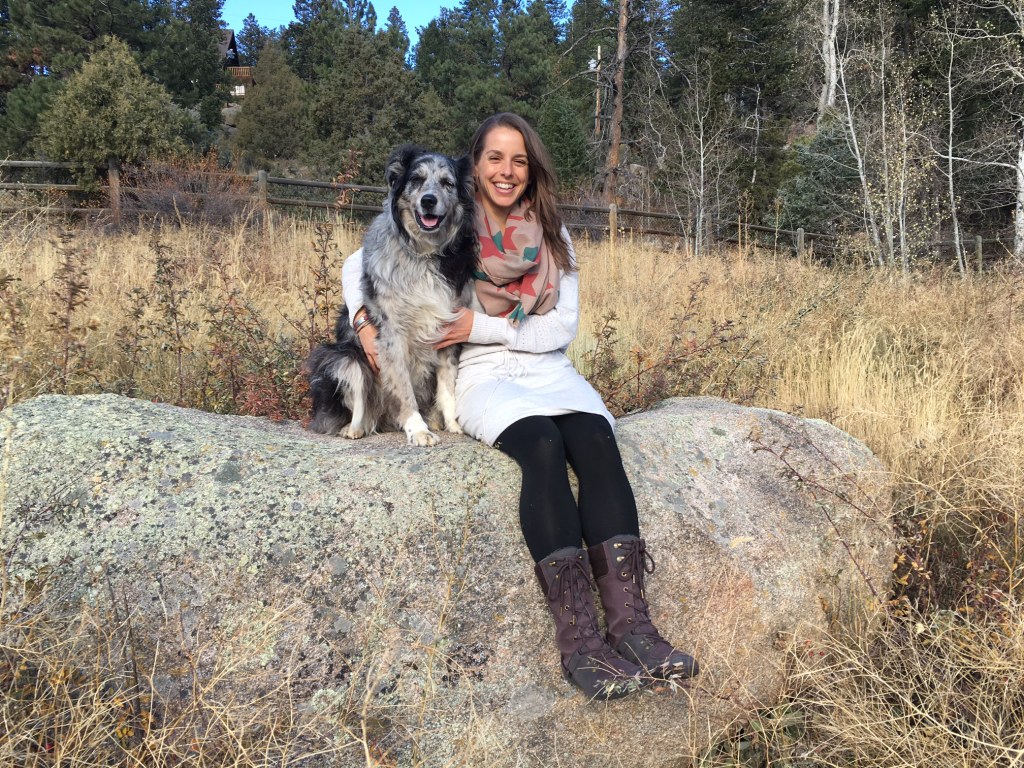
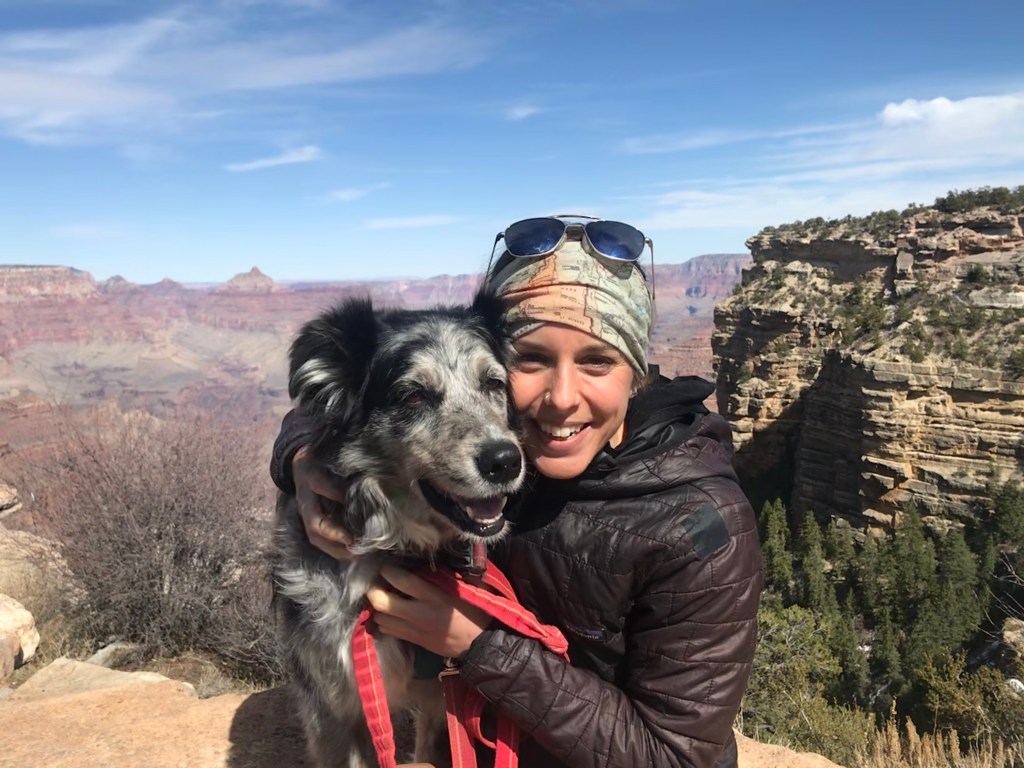
 A Dog and Her Girl