"But if you tame me, then we shall need each other. To me, you will be unique in all the world. To you, I shall be unique in all the world . . ." – The Little Prince
Author: Ray of Sunshine
I consider myself first and foremost, a dog mom. Second, I consider myself an explorer, healer, and writer. To use more societally accepted labels, I'm a mental health therapist with a background in wilderness therapy, a running coach, and writer. My blog will share stories of growth, healing, mental wellness, the occasional running post, and of course, my adventures with my dog.
Did I catch you with my title? Good. Now that I’ve got you hooked, I’ll admit it’s a bit misleading. That’s not to say I won’t give you some solid mental health tips, but we’re going to dive a bit deeper than that.
As a therapist, my job is not that of a fixer. I’m a healer. I don’t fix things that are broken; I help wounded people heal. Essentially, I use my curiosity to help my clients uncover what the root of their troubles are. And we heal from the ground up.
With that being said, what I want to explore with you in this article is what is at the root of winter blues, or what some people call seasonal affective disorder (SAD).
Until recently, most people thought that SAD was related directly to the amount of light, or rather lack thereof, each day. I’m sure anyone who’s moved to Estes Park from the midwest will tell you that they don’t miss the 3 straight months of grey skies and no sun. While I don’t discount the influence of light and think a supplement of Vitamin D would be beneficial for most people, that wouldn’t explain why the people of Tromso, Norway, where inhabitants receive only 2-3 hours of indirect sunlight November through January, see little difference in their mental health in the winter. Or why my own experience with SAD changed in my early twenties. Or why some people in Estes Park have SAD, and others don’t. To go one step deeper, I wonder if YOU have experienced SAD every year of your life, or only some years? And finally, why did the Diagnostic and Statistical Manual of Mental Health Disorders (DSM-5) decide to leave out SAD in their latest edition, and instead list it as a specifier (“with seasonal pattern”) to major depressive disorder?
Is it possible that in the winter something else changes besides how long the sun appears in the sky?
A quick side note on depression: To date in my career as a therapist, I have never met anyone who is depressed for no reason. There is ALWAYS a reason.
When I was an intern at Harmony Foundation, my supervisor theorized that SAD had to do more with lack of getting outside, rather than sunlight. That seemed like a pretty valid theory. Personally, I know that my own experience with SAD diminished when I started trail running outside in the winter rather than always being inside a gym (not to discredit the gym as research shows there are substantial mental health benefits to exercise). Plus, have you ever met one of the skiers or snowboarders in town? They are STOKED when the first big snowfall hits.
One other theory that I’ve read in various sources is that our social habits tend to change in the winter. Besides major holidays, people tend to gather less in the winter, and even that option wasn’t considered a possibility for many this past year. In his book “Lost Connections” Johann Hari theorized that most cases of depression and anxiety are due to disconnection in relationships. When I worked with people with alcohol addictions, I can’t recall any instance of a client saying they were an alcoholic and went to the bar everyday. Maybe that’s where the drinking started, but it didn’t become a problem until they started drinking at home every night, alone.
While I won’t claim here that I have THE answer to seasonal affective disorder or winter blues, I will say that lack of connection to Nature, to other people, and to ourselves might be at the root. However, I do want to clarify that connection is different from being at work or in a store and saying “hi” to people. Real connection means that when we are together, we have the space to truly be ourselves and allow for the others to truly be themselves as well. We can speak freely about our emotions and thoughts. It ensures empathy and an allowance for each person, animal, tree to be amazing just as they are. We connect, meaningfully, at our cores.
Before I move into ways to stay mentally healthy, or even improve mental health this winter, I won’t pretend that in the COVID era, things are tougher. Much tougher. As I wrote in an article last year for the EP Trail Gazette, it’s okay to grieve, to just allow the tears. Once we find that release, it creates space for other possibilities. For instance, re-reading what connection is, you may already be able to come up with different, creative ways to gather and connect with others.
Mental Health Tips for Winter (in the Covid Era)
Mindset: To Dread or To Find Opportunity this Winter?
One other thing I learned when reading about the people of Tromso, Norway, is that they use a mindset tip similar to what I use with the athletes I work with. When a race, or winter, is on the horizon, do you view it as a threat or a challenge? When we view things as a challenge, we also tend to see opportunities for play and for growth while a threat is scary and we either want to fight it, flee, or shut down (depression)…and good luck fighting snowflakes.
List Out Things You Are Looking Forward To
Remember that big snow storm we had in March? I deemed it “The Great Snuggle Weekend of 2021” and wrote a list of all the things I planned to do: play on my neighborhood hill, bake banana bread, read a book, and snuggle with my pup. Even if you are more like me, a summer person, there’s so much to look forward to in winter, especially in Estes Park. I’ll list a few below in more detail, but for starters, I’m looking forward to hot drinks at my favorite coffee shops in town and being able to walk into a restaurant without an hour wait!
Getting outside
In the mental health world, recent years have seen a boom of research and articles on the effect of nature and mental health. In short, nature has been shown to reduce stress, calm our buzzing brains, and boost mood, not unlike an antidepressant. You don’t have to be a skier or snowboarder to enjoy outdoor activities either. In town, there are still plenty of opportunities to hike, but just a simple walk around your neighborhood or bird watching from your deck will have benefits. The key is to see the beauty that is around you. If you can hike, you can also probably snowshoe. If you don’t want to invest in a pair, you can rent a pair for a whopping $5 at Estes Park Mountain Shop. If that’s not your speed, Trout Haven and the YMCA offer ice skating. Then there’s my personal favorite: good ol’ sledding, great for kids of all ages! And that leads to my next tip…
Snuggling
Perhaps my favorite part of winter is that it offers constant opportunities for warm drinks, either made at home or stopping at a coffee shop on the way home from an outing. I’m already day dreaming of finding a cozy spot upstairs at Inkwell & Brew and gazing out their large windows. Then there’s getting to wear oversized sweaters to work and calling it “fashion”, wrapping myself under blankets (or my dog, who sometimes pretends she is a weighted blanket), and fuzzy socks. Truly, all these things are a form of self-soothing. Still, if you have a partner, child, or fur-kid around, research suggests two is better than one. When we cuddle with someone we care about, we release what are known as the “feel good hormones” (serotonin, oxytocin, dopamine).
Connecting with Others
This, I believe, is the biggest one. Save for last year, I considered winter to be my favorite time to be a local in Estes Park because I could truly get the sense of being part of a small, mountain community. While nothing can fully replace in-person interactions or hugs, virtual interfaces did help many of us stay in touch with loved ones and I would heavily encourage anyone to use it who for various reasons can’t see loved ones in person. On the red-nosed reindeer side, I think there’s more hope this year with more education on the virus and treatment. Regardless, we beautiful humans in town have adapted as best we could, and when I simply asked in a locals online forum what community gathering opportunities were available, I received much more feedback than I expected. From trivia at Rock Cut Brewing to locals night at Chippers Lane and Dine Around Town in March, there was something for all ages and interests. If necessary, I know we’ll adapt and change again. The key is that we maintain and strengthen our ties to one another through whatever means necessary. We thrive in community through compassion, cooperation, and connection.
[When my parent’s divorced, sometime around when I was 8 years old, I could never understand how two people could have once said they love each other, and then not have it work out. To make sense of it, my young brain said “love isn’t real.” As an adult, you can only avoid it, love, for so long. As much as I tried. Now, I’ve realized, part of my growth understanding what my parents could never explain to me. And it fucking hurts.]
I miss you I love you
I wanted to text At least 5 times last night
Better to feel all of it now Rather than prolong it I finally decided
But maybe, maybe We could wait until we start to fight You’re wrong, I’m right Then maybe this would hurt less
We’ve already been through this Once Twice Now three times
Each time The pain intensified
Anger Why did you have to touch me again? Why did you have to comfort me as I cried?
The tightness in my throat, choking The sadness rising Until the release I’m still waiting it for it to stop.
Old wounds Awakened inside of me Of love not lost Simply just not to be
I never understood Now just feels so unfair So cruel
To love you so much and know That we’re not meant to be.
33 and I’ve never felt so free I’ve got the Earth under my soles The Sky under my wings. Life in my veins.
I’m 33 Still young My sun hasn’t fully reached its peak.
But it’s getting closer With the breeze I swear I catch the scent of fall.
In my health, I know I could live double, triple 33 66, 99.
I either don’t think I will Or I don’t want to Or both Either ego or a spiritual thing Again, probably both.
Do I fear Death? Sometimes When I’m feeling unsure Unsure of what’s next Unsure of myself.
Mostly, I fear living a life unexplored Mountains Myself The stories of others.
I know I can’t explore it all But in my Heaven The journey won’t end.
My older sister, she only got 36. I’ll hug her again Maybe Pacer won’t bite. We’ll run and play forever.
Then I come back To the Here The Now.
I reassure myself I am on my path I feel it mostly in contentment, but also joy I have explored, learned, and gained so much already It’s hard to see what lies ahead Beyond what I create.
Pull me in. Hold me close. Just don’t grasp or I’ll slip through the cracks. But set me free and I’ll always come back. To the promise of a gentle kiss.
One more night at my spot in the clouds. To read, to write. To wander, to breathe, to be. And maybe to cry a little too. Away from it all… Or maybe I’m in it all? Alone with my pup. Here with the pines. The flowers and the bees. The snow melt cascading behind. Mountains surrounding. What else more? More complicated, most likely. Save for the love of family and friends, My world needs little else.
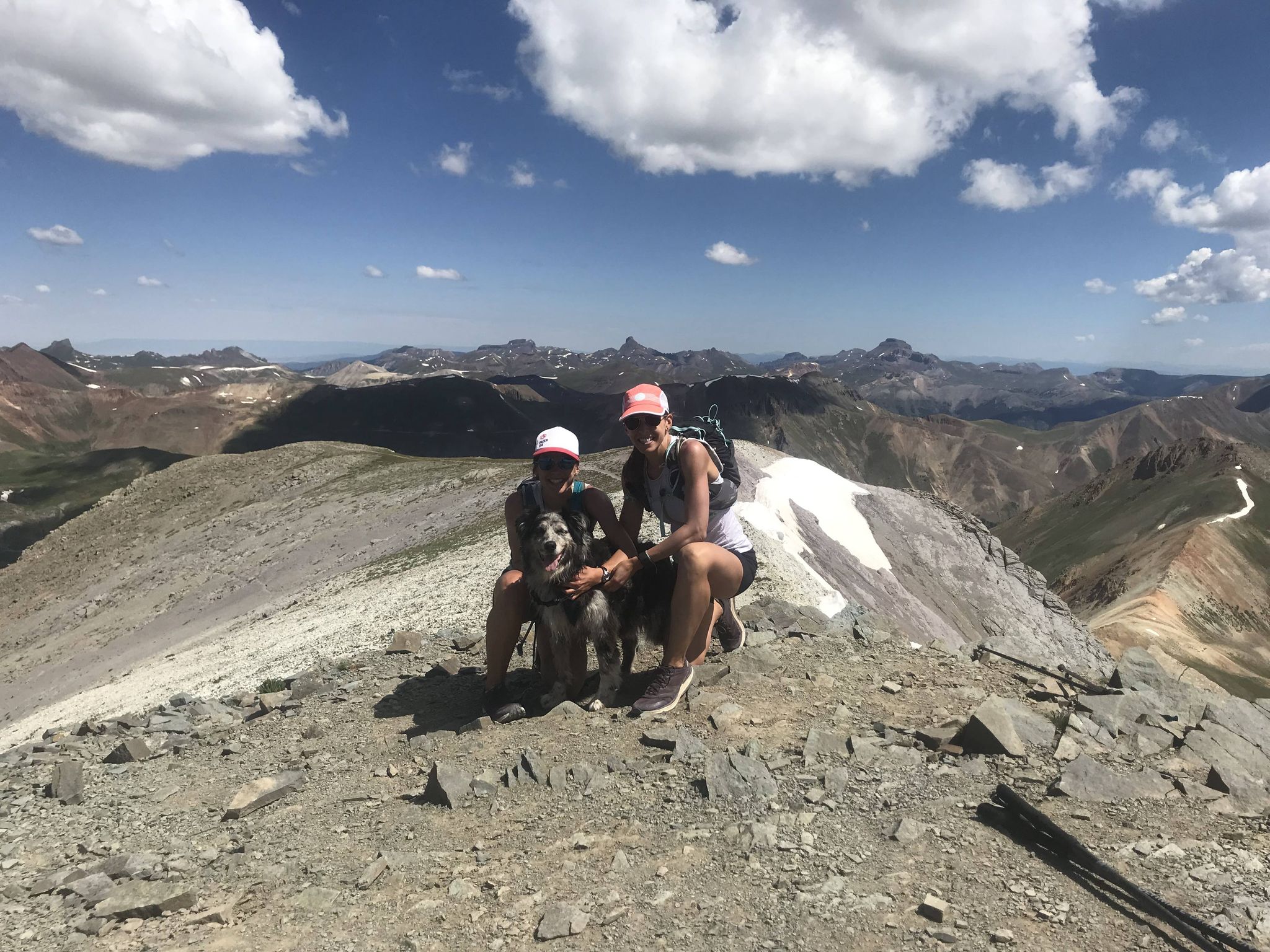
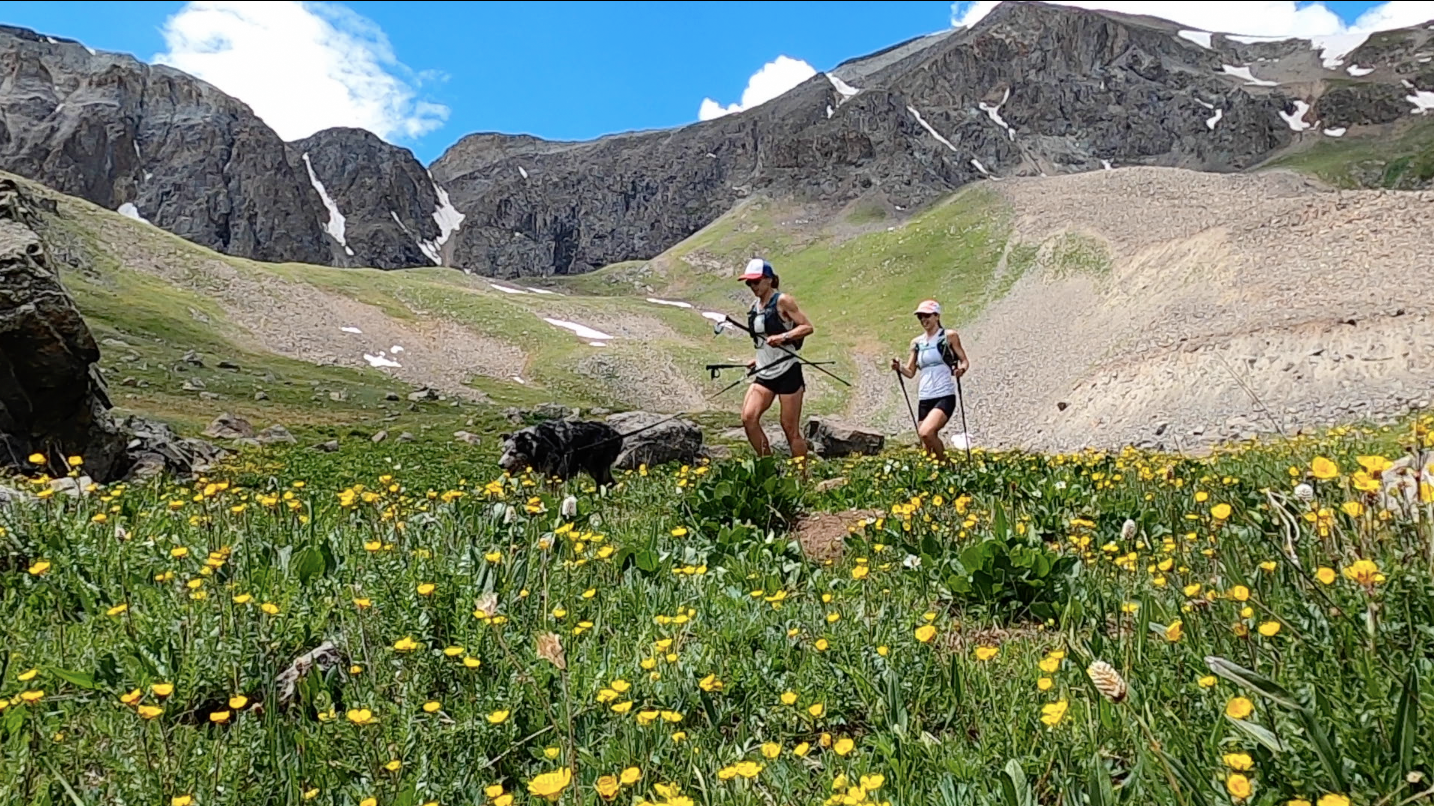
A lot of my best day evers happen to be in the mountains, usually with Pacer and Sandi. (First picture, Sandi, Pacer, and I on Handies Peak during Pacer’s Big Day.)Sometimes it’s just spending quality time with family and friends. Both make my soul feel brighter and my heart want to explode.
Every time I say “Best Day Ever” now, I remember Amanda saying it, literally on her deathbed, when we had an indoors picnic with my little cousins. (Second picture.) On that day we all cried. But there was SO MUCH LOVE.
I’m still discovering the wisdom of her words in that moment. I think somewhere in there is taking for granted the little, amazing things life has to offer. And that most of us don’t (allow ourselves to) have nearly enough “Best Day Ever(s)”.
Dear "T",

Sometimes it hurts so much I feel like I can’t breathe.
I cry,
But often it’s a silent scream.

Did you know what you were leaving behind?
What was it like to say “goodbye”?
And now that you’re on that soul vacation
Have you found some peace and happiness?
Because I’m still looking for some consolation.

Do you miss us like we miss you?

And tell me Big Sis,
What was it like, so young,
To write like you’re running out of time?
What would you have done if you had more?
Are you proud of what I’m doing with mine?

And what were you feeling when you wrote that line
“Life is beautiful...Even when it’s not?”
I feel like I ought to know,
But I could never say what was going through your mind.

I just need one little sign.

Because honestly,
Every once in a while, I feel a little lost,
Could use some (big) sisterly advice.
Even just a little would suffice.

Sometimes I think,
When you were planning out this life,
That you decided to put Sandi and I together,
Even if it meant you’d get a little less attention
(It can’t be easy being the big sister of twins),
So we’d still have each other,
When you left for the heavens.


Did Uncle Ronny and Aunt Barb greet you when you passed?
Our fur-sisters Sophie and Savanna too?

I know this pain is going to last.
I’m finding that’s okay.
Within the grief is joy,
Connecting me to you.

Love Always,

Your Little Ray Ray of Sunshine

P.S.  While I may never have the literary skills you did, I hope you’re pleased that I got in the  Train and Hamilton reference. 🙂
P.P.S.  Can you just give me a hint on how we came up with the nickname “T”?
That is one good thing about this world… there are always sure to be more springs. -L.M. Montgomery
Let me start out by saying that changing, growing, and expanding is hard. Sometimes really hard. It can be painful. (The term “growing pains” is accurate beyond our school-aged growth spurts.) It’s certainly not always fun. But the journey is always worthwhile.
When a new client walks into my office at my private practice the first thing I always try to acknowledge is how brave they are. In a society that values independence and a bootstraps attitude, asking for help takes courage. Additionally, being willing to look at ourselves, our behaviors, and our wounds can be scary and a brave undertaking. It’s the most beautiful adventure that I have been honored enough to witness in other human beings.
The season of spring brings change and growth to the forefront, both in nature and inside of us, if we are willing to look.
The older I get, the more I feel the change of each season inside of me. I also recognize it regularly in my counseling practice. In summer, there’s an internal sensation of energetic being, exploration, and an allowing of the present self. Fall is often a time when we recognize a time of letting go as well as harvesting our resources as we prepare ourselves for an internal winter. During the winter months, we switch for a need to reflect, hibernate, and go deeper inside of ourselves. Winter, as dark and cold as it may be, is usually when I see deeper wounds start to heal. Then out of the darkness comes spring. A time for new life and new energy, but this path is rarely linear. There’s usually a movement and release, and then we hit a rock (or a snowstorm) and need to pause and reroute. This might happen a few times before the growth turns into a blossoming.
How do we work with the changes, growth spurts, and growing pains of spring?
We embrace it all. We tend to ourselves as we would tend to a garden. Knowing that growing isn’t easy, we weed out what no longer serves or nourishes us. We think of the things we need to support our upward rising. Is it more connection with friends, a dose of self-compassion, more time outside, or even more time inside? Acceptance of where we are at in the process is also key. Some people are more like Pasqueflowers that bloom in early spring. Others are like Colorado Columbines who need all spring to deepen their roots before they burst into the light of summer. We don’t judge the flowers for when they bloom, but love them whether we get to see their beauty in April or July. We must do the same for ourselves.
Spring Mental Health Practices
Yourself as Garden
Similar to the above process, imagine your internal journey as a garden. What are you growing? Does it need some more time safe from the elements in a greenhouse, or is it ready for exposure and testing outside? What are the potential blocks to growth? Is there anything that needs weeding out? What nutrients (positive care) do you need to support your growth?
If You Were a Tree (or Flower)
If you were a tree, what type of tree would you be. Why? What characteristics of the tree do you possess? What characteristics would you like to possess?
Adding Intention
As the weather (slowly) starts to warm, you may be naturally finding yourself outside more, going for hikes, sipping your morning coffee on your deck, taking your dog for walks more often. Is there a way you could make these acts a little more meaningful? For example, is your morning coffee now a way to greet a new day? Your hike a time to connect with the earth? Or your dog walk a time to let go of the stressors of the day and find freedom in your movement? A little bit of intention can go a long way.








 A Dog and Her Girl